Description
Specifications:
| Feature | Details |
|---|---|
| Brand | Polylab |
| Material | High-quality, durable, color-coded plastic |
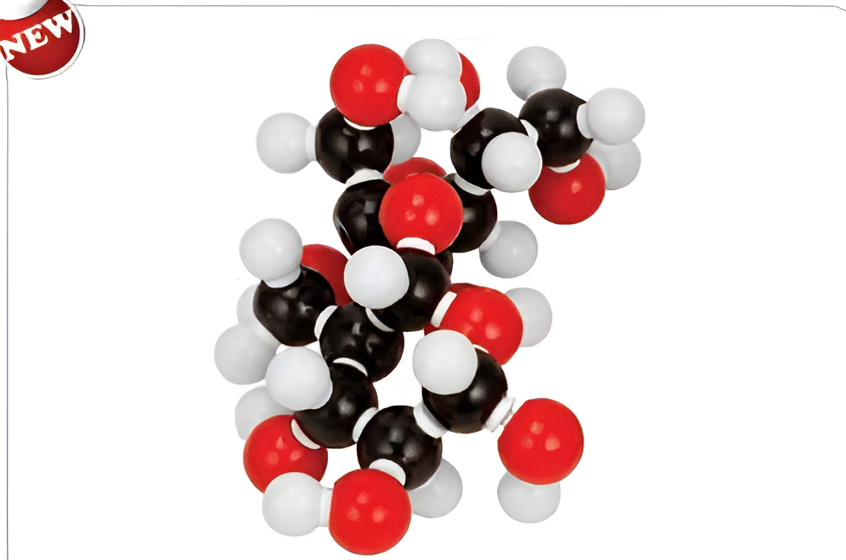
| Model Type | Molecular Model Set for Sucrose (C₁₂H₂₂O₁₁) |
| Design | Includes carbon, hydrogen, and oxygen atom units with connectors |
| Structure Representation | Builds the full 3D structure of sucrose – a disaccharide |
| Assembly | Easy to assemble and disassemble |
| Educational Use | Perfect for teaching carbohydrate chemistry and biochemistry |
| Storage Box | Comes in a sturdy, organized storage case |
| Application | Suitable for classrooms, lab demonstrations, and student projects |
Product Overview:
Polylab Molecular Model Set – Sucrose (C₁₂H₂₂O₁₁) is an essential hands-on teaching tool for demonstrating the detailed structure of sucrose, the most well-known disaccharide in everyday life. This high-quality model kit includes durable, color-coded carbon, hydrogen, and oxygen atom parts along with secure connectors that accurately represent the chemical bonding in sucrose.
With this Sucrose Molecular Model, students can visualize how glucose and fructose units link via a glycosidic bond to form the complete disaccharide structure. The 3D model helps learners grasp how carbon, hydrogen, and oxygen atoms are arranged and how functional groups like hydroxyl groups connect within the molecule.
This Carbohydrate Chemistry Model is ideal for explaining topics like sugar structure, glycosidic linkages, isomerism, and the biochemical role of sucrose in plants and human nutrition. Easy to assemble and reuse, it supports repeated demonstrations, lab exercises, and engaging lessons that make complex organic chemistry concepts easy to understand.
Each set comes neatly packed in a robust storage box to keep all parts organized and safe for daily classroom or lab use. Pair this with other Polylab Molecular Model Sets to build a complete visual toolkit covering carbohydrates, proteins, lipids, and nucleic acids. For additional related study aids, browse our Other collection. For trusted chemical data and reference material, consult the PubChem Compound Database, which provides detailed information about sucrose’s properties and structure.