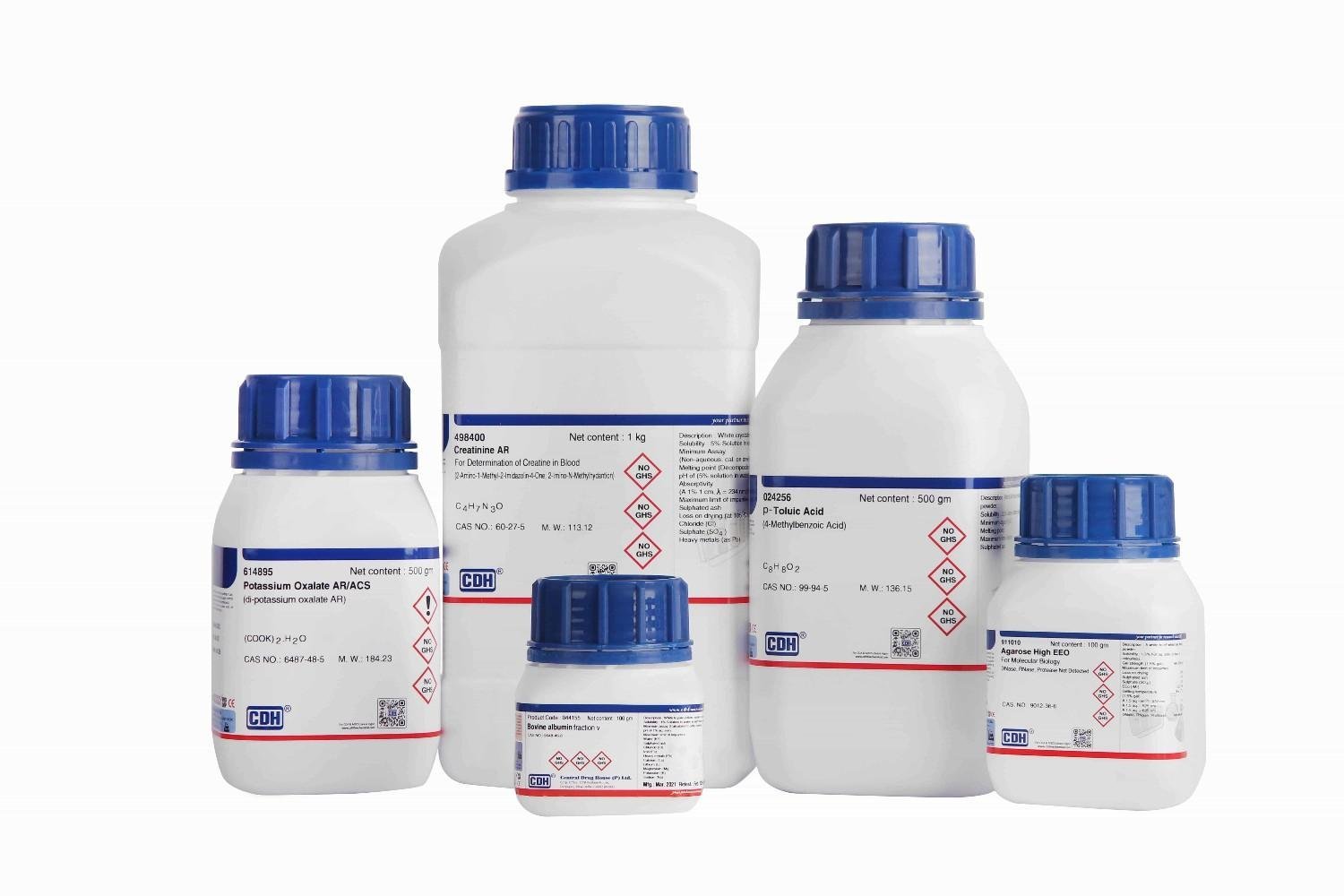
Description
Specifications Table
Product Name – Molecular Sieves Type 13×1.5mm
Quantity/Pack Size – 250 gm, 5 kg, 25 kg
Form – Beads
Grade – Laboratory
Application – Moisture and gas adsorption
Product Overview
Molecular Sieves Type 13X (1.5 mm) are high-performance crystalline aluminosilicate adsorbents designed for efficient drying, purification, and separation of gases and liquids. Featuring a uniform pore size of approximately 10 Å, Type 13X sieves are capable of adsorbing molecules with larger kinetic diameters, making them suitable for a wide range of laboratory and industrial applications.
These 1.5 mm bead-size molecular sieves offer rapid adsorption kinetics, high capacity, and excellent mechanical strength. They are commonly used for drying solvents, removing moisture and carbon dioxide from gases, air separation processes, and purification of hydrocarbons and other chemical streams. Their consistent particle size ensures uniform flow and reliable performance in packed columns and laboratory setups.
Manufactured under strict quality control, Molecular Sieves Type 13X are ideal for use in chemical laboratories, pharmaceutical research, petrochemical processing, and analytical applications where effective moisture control and adsorption efficiency are critical.
FAQs
1. What is the primary application of Molecular Sieves Type 13×1.5mm?
Molecular Sieves Type 13×1.5mm are primarily used for moisture and gas adsorption in laboratory settings, including gas drying, solvent purification, and chromatography.
2. How should Molecular Sieves Type 13×1.5mm be stored?
Store in a dry, airtight container away from direct sunlight and moisture to maintain their adsorption efficiency.
3. Are these molecular sieves compatible with all lab equipment?
Yes, these sieves are compatible with standard laboratory equipment designed for adsorption applications.
4. What is the shelf life of Molecular Sieves Type 13×1.5mm?
The shelf life is typically 2-3 years when stored properly in sealed packaging.
5. Can these sieves be regenerated for reuse?
Yes, they can be regenerated by heating to 250-300°C in a controlled environment to remove adsorbed moisture and gases.