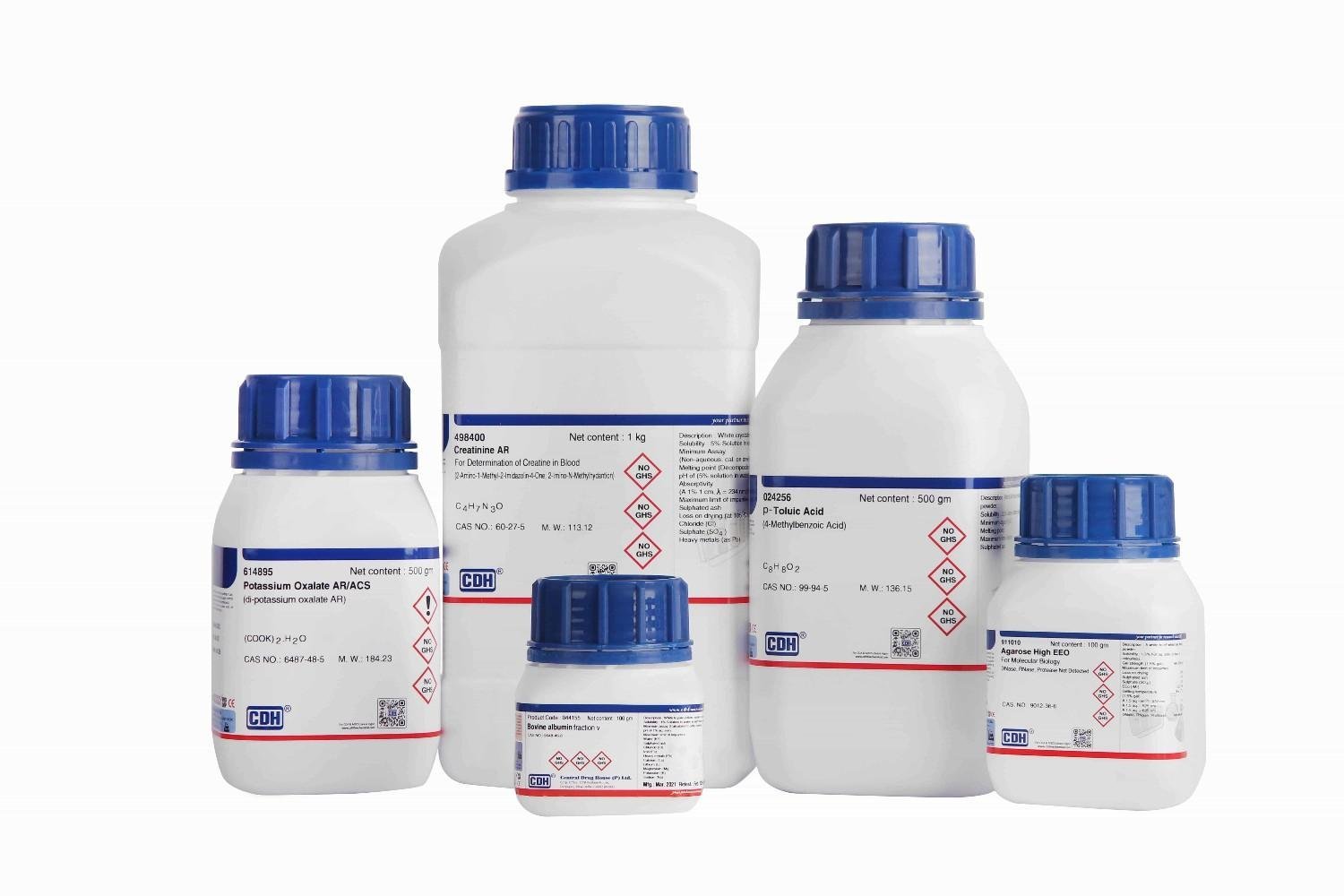
Description
Specifications Table
| Product Name | n-Cetyl-N,N,N-Trimethyl Ammonium Chloride 30% w/v |
|---|---|
| Pack Size | 100 ml, 500 ml |
| Form | Liquid Solution |
| Grade | Laboratory Grade |
| Application | Surfactant, Molecular Biology, Protein Extraction |
Product Description
n-Cetyl-N,N,N-Trimethyl Ammonium Chloride, commonly known as CTAB, is a quaternary ammonium surfactant widely used in laboratories for its cationic properties. This 30% w/v solution is highly effective in applications like DNA extraction, protein purification, and as a phase-transfer catalyst. Researchers and students rely on CTAB for its ability to stabilize emulsions and enhance cellular lysis in biochemical protocols.
When you buy CTAB online from eqipped, you get a high-purity product that meets stringent laboratory standards. Whether you’re working on molecular biology experiments or surfactant research, this solution ensures consistent results. The 100 ml and 500 ml pack sizes make it convenient for both small-scale and bulk requirements.
CTAB is also a key ingredient in the preparation of cationic micelles, making it indispensable in nanotechnology and drug delivery studies. Its versatility extends to industrial applications, including fabric softeners and antimicrobial formulations. For researchers seeking a reliable ctab surfactant supplier, eqipped provides a trusted source with competitive cetyl trimethyl ammonium chloride price points.
Upgrade your lab experiments with premium-grade CTAB. Order now for seamless delivery across India.
FAQs
What is the shelf life of n-Cetyl Trimethyl Ammonium Chloride 30% solution?
The solution remains stable for up to 2 years when stored under recommended conditions (15–25°C, away from direct sunlight).
Can CTAB be used for RNA extraction?
While CTAB is primarily used for DNA extraction, it can be adapted for RNA isolation with proper protocol modifications to prevent degradation.
Is this product suitable for cell culture applications?
No, CTAB is cytotoxic and should not be used in cell culture media. It is intended for extraction and surfactant-based applications only.
What is the difference between laboratory-grade and industrial-grade CTAB?
Laboratory-grade CTAB undergoes stricter purification to minimize impurities, making it ideal for sensitive research applications.
How can I dispose of CTAB waste safely?
Follow local chemical waste disposal regulations. Neutralize the solution if required and dispose of it through authorized hazardous waste channels.