Description
Specifications
Product Name – Paramecium Model
Quantity/Pack Size – Single Unit
Form – 3D Protozoan Replica
Grade – Laboratory Grade
Application – Microscopic Structure Study, Protozoa Observation, Laboratory Demonstration
product overview
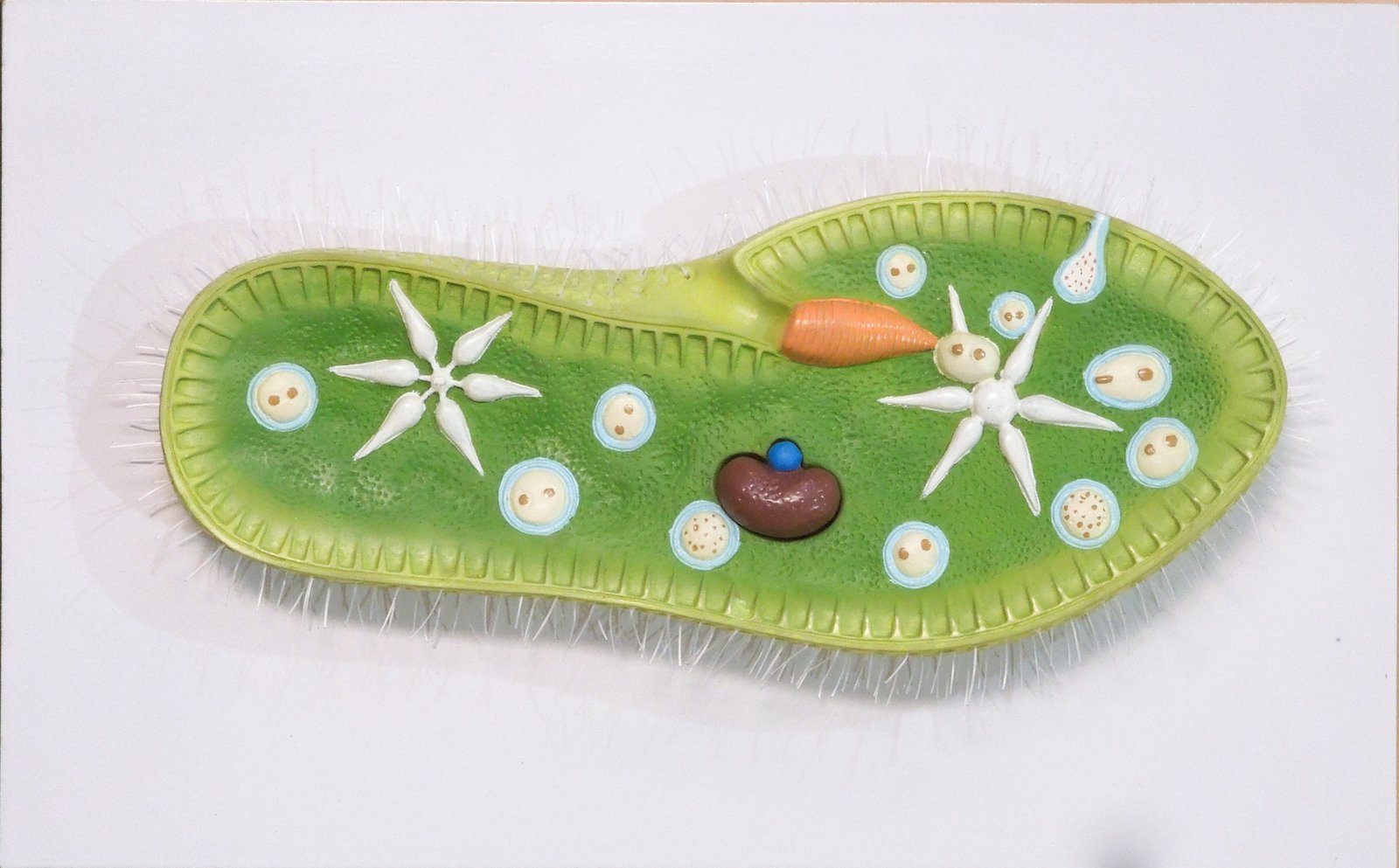
The Paramecium Model is a high-precision laboratory-grade replica designed to illustrate the intricate structure of this single-celled ciliate protozoan. Constructed with careful attention to detail, the model highlights all major cellular components, including the cell membrane, cilia, oral groove, contractile vacuoles, macronucleus, micronucleus, and other organelles critical for understanding the organism’s morphology and functional design. Made from durable, non-toxic materials, this model ensures longevity and repeated handling without damage. The three-dimensional representation allows for clear visualization of internal and external structures, facilitating a comprehensive understanding of Paramecium anatomy. Color differentiation or subtle shading is employed to distinguish various organelles and ciliary structures, enhancing clarity and observation accuracy. Mounted securely on a stable base, it allows for convenient manipulation and close examination from multiple angles. The design emphasizes realistic proportions, enabling precise study of organelle positioning and interaction within the cellular structure. Ideal for repeated use in laboratory environments, the Paramecium Model supports detailed study, demonstration, and observation, offering a robust and visually accurate representation suitable for laboratory displays. Its combination of high-quality craftsmanship, durable materials, and anatomical accuracy makes it an essential tool for learners, educators, and researchers seeking a tangible model to examine protozoan structure and morphology in depth.
FAQs
1. Can this model display all cellular organelles accurately?
Yes, it represents all major organelles, including nucleus, contractile vacuoles, cilia, and oral groove with clear detailing.
2. Is the model compatible with other 3D protozoa models?
Yes, it can be used alongside other protozoan or microbial models for comparative study and demonstration.
3. What are the recommended storage conditions for this model?
Keep it in a dry, dust-free environment away from direct sunlight to preserve colors and structural integrity.
4. Are replacement parts available for damaged components?
Certain parts can be replaced to maintain model functionality and anatomical accuracy over time.
5. Can the model be handled frequently without damage?
Yes, it is constructed from durable materials suitable for repeated laboratory handling and observation.