Description
Specifications Table
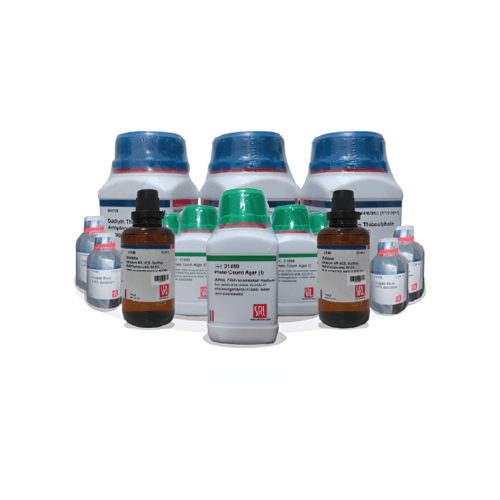
Product Name – Phenol Red Tartrate Agar (Jordan Tartrate Agar)
Quantity/Pack Size – 100 Gms, 500 Gms
Form – Powder
Grade – Laboratory
Application – Isolation and differentiation of Enterobacteriaceae
Product Overview
Phenol Red Tartrate Agar (Jordan Tartrate Agar) is a specialized culture medium designed for the selective isolation and differentiation of Enterobacteriaceae. This agar is widely used in microbiology labs for its ability to differentiate between lactose-fermenting and non-lactose-fermenting bacteria. The medium contains phenol red, a pH indicator, which changes color in response to the acidity produced by the fermentation of lactose. This makes it an excellent tool for identifying and studying various bacterial species. The agar is formulated to support the growth of Enterobacteriaceae while inhibiting the growth of other bacteria, ensuring accurate and reliable results. Its high-quality composition ensures consistent performance, making it a reliable choice for both educational and research applications.
FAQs
1. What is Phenol Red Tartrate Agar used for?
Phenol Red Tartrate Agar is used for the selective isolation and differentiation of Enterobacteriaceae, helping to identify lactose-fermenting and non-lactose-fermenting bacteria.
2. Is this agar suitable for educational purposes?
Yes, Phenol Red Tartrate Agar is ideal for educational purposes, providing a reliable and effective tool for students to learn about bacterial differentiation.
3. Can this agar be used for research purposes?
Absolutely, the high-quality formulation of Phenol Red Tartrate Agar makes it suitable for various research applications in microbiology.
4. How should Phenol Red Tartrate Agar be stored?
Phenol Red Tartrate Agar should be stored in a cool, dry place away from direct sunlight to maintain its effectiveness and shelf life.
5. What are the key components of Phenol Red Tartrate Agar?
The key components include phenol red as a pH indicator, tartrate as a selective agent, and other nutrients to support bacterial growth.