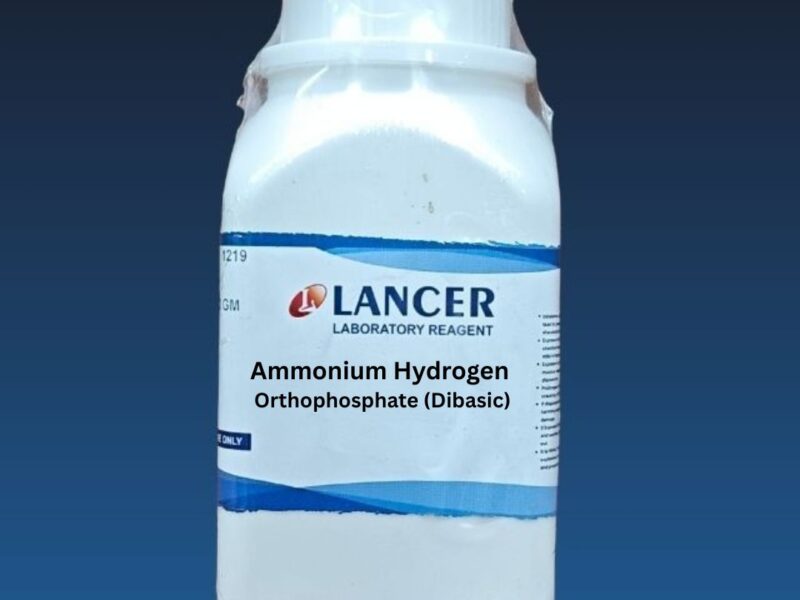
Description
Specifications Table
Product Name – Phosphate, Ion chromatography standard solution, Specpure®, PO4|-3 1000µg/ml
Quantity/Pack Size – 100ml, 500ml
Form – Liquid
Grade – Specpure® (High Purity)
Application – Ion chromatography calibration, phosphate analysis
Product Overview
This Specpure® phosphate ion chromatography standard solution delivers a 1000µg/ml concentration of PO4³⁻ ions, meticulously formulated for high-accuracy analytical applications. The solution is prepared using ultra-pure reagents and deionized water to minimize interference, ensuring consistent performance in ion chromatography systems. Its traceable composition adheres to strict quality control protocols, making it ideal for calibration curves, method validation, and routine phosphate quantification. The Specpure® grade guarantees low background contamination, while the stable matrix formulation extends shelf life without compromising precision. Compatible with most HPLC/IC instruments, this standard eliminates variability in phosphate measurements, providing researchers with reproducible results across different sample matrices. The solution comes in amber glass bottles to prevent photodegradation, with tamper-evident seals to maintain integrity during storage and handling.
FAQs
1. What is the shelf life of this phosphate standard solution?
The solution remains stable for 24 months from the date of manufacture when stored unopened at 2-8°C. Once opened, use within 3 months for optimal accuracy.
2. Can this standard be used with suppressed conductivity detectors?
Yes, the Specpure® formulation is compatible with suppressed conductivity detection systems commonly used in ion chromatography for phosphate analysis.
3. What diluent should be used for preparing working standards?
Use 18.2 MΩ·cm deionized water or the same mobile phase as your analytical method to maintain matrix consistency when diluting the standard.
4. How does this compare to phosphate standards from other brands?
Specpure® standards undergo additional purification steps to reduce metallic and anionic contaminants, offering lower detection limits compared to general-purpose standards.
5. What precautions should be taken during storage?
Store upright in the original amber bottle at 2-8°C. Avoid freeze-thaw cycles as they may alter the phosphate concentration through precipitation.