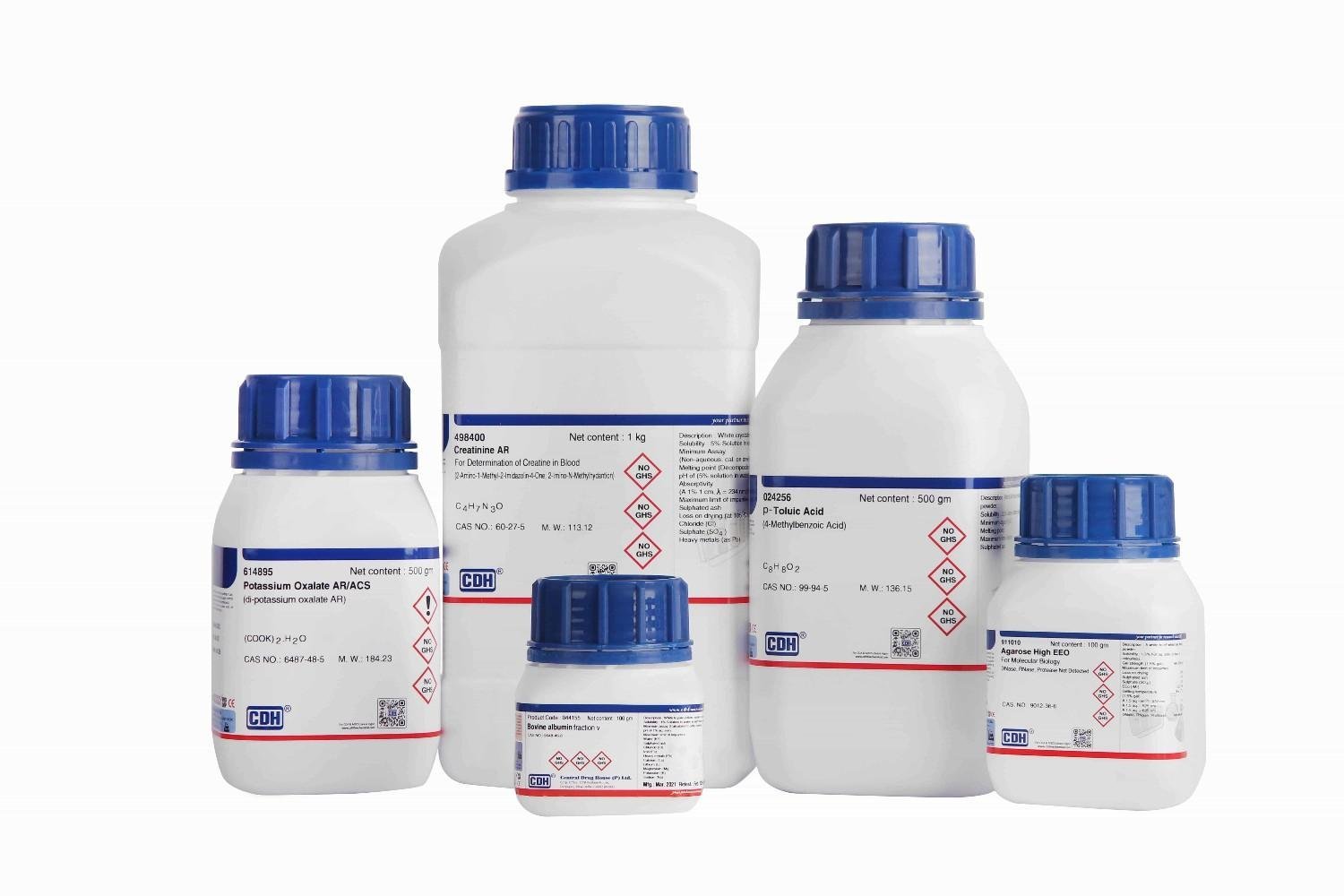
Description
Specifications Table
| Product Name | Phosphorus Pentachloride 98.0% | 190785 | CDH |
|---|---|
| Pack Size | 250 gm, 500 gm |
| Form | Solid (Crystalline) |
| Grade | Laboratory Reagent |
| Application | Chlorinating agent, organic synthesis, research |
Product Description
Phosphorus Pentachloride (PCl₅) is a versatile inorganic compound widely used in laboratories for chlorination reactions, synthesis of organic intermediates, and as a catalyst in various chemical processes. With a purity of 98.0%, this CDH-grade reagent ensures reliable results in research and academic settings.
This high-quality phosphorus pentachloride is ideal for students, researchers, and educators working on experiments involving halogenation, dehydration, or the preparation of acid chlorides. Its crystalline form makes it easy to handle, though proper safety measures must be followed due to its reactive nature.
Whether you’re conducting a small-scale experiment or a larger research project, eqipped provides phosphorus pentachloride in convenient pack sizes of 250 gm and 500 gm. Our supply chain ensures timely delivery across India, so you can focus on your work without delays.
Need phosphorus pentachloride for your lab? Buy online now and get authentic CDH-grade chemicals delivered to your doorstep.
Phosphorus pentachloride reacts vigorously with water, releasing hydrochloric acid and heat. Always store it in a cool, dry place away from moisture and incompatible substances. Use appropriate personal protective equipment (PPE) when handling.
FAQs
What is the shelf life of phosphorus pentachloride?
When stored properly in a sealed container, phosphorus pentachloride remains stable for up to 2 years. Avoid exposure to moisture to prevent decomposition.
Can I use phosphorus pentachloride for industrial applications?
While this product is lab-grade, industrial users should verify if additional purity or documentation is required for their specific processes.
How do I dispose of phosphorus pentachloride waste?
Neutralize small quantities with a dilute sodium hydroxide solution before disposal. For larger amounts, follow your institution’s hazardous waste protocols.
Is phosphorus pentachloride soluble in water?
No, it reacts violently with water to form hydrochloric acid and phosphoric acid. Always handle it in dry conditions.
What are the alternatives to phosphorus pentachloride for chlorination?
Thionyl chloride (SOCl₂) and oxalyl chloride are common alternatives, though their reactivity and suitability depend on the specific reaction.