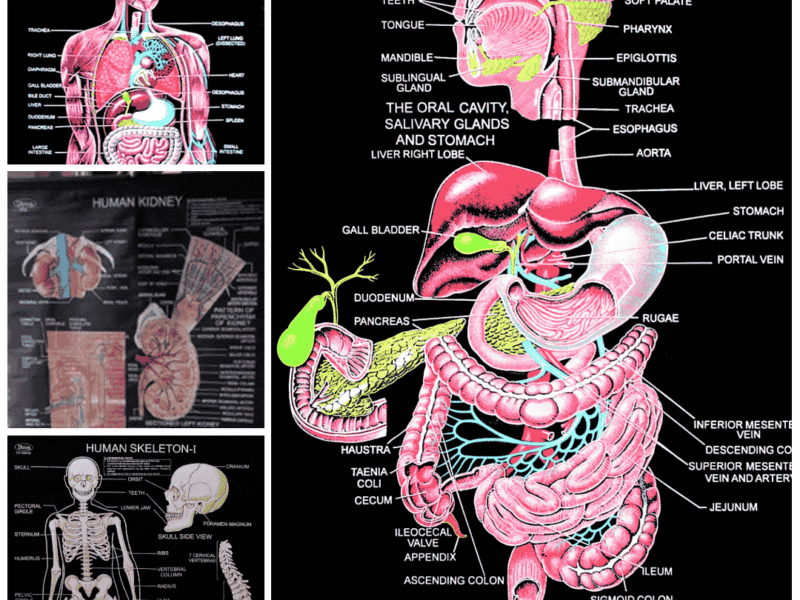
Description
Specifications Table
Material – Laminated Paper
Pack Size – Single Chart
Grade – Educational & Research
Application – Comparative Study, Teaching Aid
Dimensions – Standard A2 Size (420 x 594 mm)
Product Overview
The PLACENTA TYPES – COMPARATIVE STUDY CHART is a meticulously designed educational tool that provides a clear, visual comparison of different placental structures. Crafted on durable laminated paper, this chart ensures long-lasting use in labs, classrooms, and research settings. The A2-sized (420 x 594 mm) format offers ample space for detailed illustrations, making it easy to distinguish between various placenta types, their vascular arrangements, and functional differences. The high-resolution printing ensures clarity, even in well-lit environments, while the lamination protects against wear and tear from frequent handling. This chart is an essential reference for students, educators, and researchers studying reproductive biology, embryology, or veterinary science. Its educational-grade precision and research-oriented design make it a reliable aid for comparative studies, helping users grasp complex anatomical concepts with ease. Whether used for teaching, self-study, or professional reference, this chart delivers accurate, lab-ready information in a user-friendly format.
FAQs
1. What materials are used in this comparative placenta study chart?
The chart is printed on high-quality laminated paper to ensure durability and resistance to moisture or damage from frequent use.
2. Is this chart suitable for professional research applications?
Yes, the chart is designed for both educational and research purposes, providing detailed anatomical comparisons for accurate study.
3. Can this chart be used as a teaching aid in classrooms?
Absolutely, its clear visuals and labeled structures make it ideal for educators explaining placental variations to students.
4. What is the ideal storage condition for this chart?
Store in a dry, cool place away from direct sunlight to prevent fading and maintain the integrity of the laminated surface.
5. Are there alternative charts available for other anatomical studies?
While this chart focuses on placental types, similar comparative study charts may be available for other biological systems.