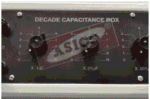
Description
Specifications Table
Product Material – High-grade metal and insulating components
Grade – Laboratory/educational grade
Application – Diode I-V characteristic analysis, reverse bias testing
Product Overview
The PN Junction Diode Characteristics Apparatus (Gujarat Type) Reverse Bias is a meticulously designed laboratory instrument for studying the fundamental behavior of PN junction diodes under reverse bias conditions. Built with high-grade metal and insulating materials, this apparatus ensures durability and precision in experimental setups. The device is engineered to provide accurate measurements of diode characteristics, making it an essential tool for educational and research laboratories. Its robust construction minimizes external interference, allowing for reliable data collection during experiments. The Gujarat Type design follows standardized specifications, ensuring compatibility with common laboratory power supplies and measurement instruments. Whether used for basic electronics education or advanced semiconductor research, this apparatus delivers consistent performance. The clear labeling and organized layout facilitate easy setup and operation, reducing experimental errors. The apparatus is particularly valuable for demonstrating the non-linear behavior of diodes in reverse bias, helping users understand concepts like breakdown voltage and leakage current. Its educational-grade certification makes it suitable for academic institutions while maintaining the precision required for research applications.
FAQs
1. What type of power supply is compatible with this diode apparatus?
This apparatus works with standard DC power supplies ranging from 0-30V, commonly found in laboratory settings.
2. Can this apparatus be used for testing other semiconductor devices?
The Gujarat Type apparatus is specifically designed for PN junction diodes and may not be suitable for other semiconductor components.
3. What safety precautions should be followed while using this apparatus?
Always ensure proper grounding, use insulated connectors, and never exceed the maximum rated voltage to prevent damage or hazards.
4. How should this apparatus be stored when not in use?
Store in a dry, dust-free environment with protective covering to prevent corrosion or damage to the components.
5. Is this apparatus suitable for both educational and research purposes?
Yes, its laboratory-grade construction makes it appropriate for both academic experiments and basic research applications.