Description
Specifications Table
| Product Name | Polyethylene Glycol 300 For Synthesis |
|---|---|
| Quantity/Pack Size | 500 ml |
| Form | Liquid |
| Grade | For Synthesis |
| Application | Biochemical research, solvent mixtures, molecular biology |
Product Description
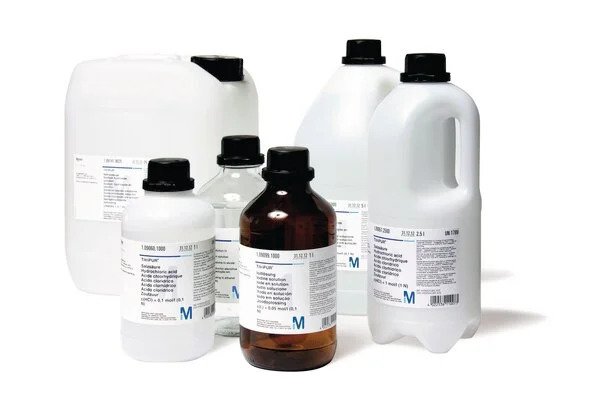
Polyethylene Glycol 300 For Synthesis is a versatile, low-molecular-weight polymer widely used in laboratories for its excellent solubility in water and organic solvents. This high-purity grade from Merck ensures consistent performance in critical applications such as protein crystallization, cell culture media supplementation, and as a non-ionic detergent in biochemical assays.
Whether you’re a student setting up experiments or a researcher refining protocols, this PEG 300 variant offers reliability and reproducibility. Its hygroscopic nature makes it ideal for maintaining moisture in samples, while its non-toxic profile ensures safety in sensitive biological systems.
At eqipped, we source this product directly from Merck to guarantee authenticity and batch-to-batch consistency. The 500 ml pack size is perfect for small to medium-scale lab work, reducing waste while providing ample quantity for repeated use.
Need polyethylene glycol 300 for your next experiment? Buy online now and get lab-ready supplies delivered to your doorstep.
Beyond its primary uses, PEG 300 serves as a plasticizer in polymer research, a lubricant in pharmaceutical formulations, and a stabilizer in nanoparticle synthesis. Its compatibility with a wide pH range further expands its utility in diverse laboratory settings.
For educators designing practical sessions, this product simplifies demonstrations of osmosis, solubility principles, and polymer chemistry. The synthesis grade ensures minimal impurities, making it suitable for undergraduate and advanced research alike.
FAQs
What is the difference between PEG 300 and other molecular weights?
PEG 300 has a lower molecular weight (average 300 g/mol) compared to higher variants like PEG 4000. This results in higher solubility, lower viscosity, and different biological properties. PEG 300 is preferred when rapid diffusion or lower viscosity is required in applications.
Can I use this PEG 300 for cell culture applications?
Yes, this synthesis grade is suitable for cell culture applications. However, for highly sensitive cell lines, you may want to consider cell culture-tested grades. Always perform compatibility tests with your specific cell type before full-scale use.
How should I dispose of unused PEG 300?
Follow your institution’s chemical waste disposal protocols. PEG 300 is generally considered low-hazard waste, but local regulations may vary. Never dispose of it down laboratory drains without proper authorization.
Is this product sterile?
This product is not supplied sterile. If sterility is required for your application, you’ll need to sterilize it using appropriate methods like filtration through 0.22 μm membranes before use.
What’s the shelf life of Polyethylene Glycol 300?
When stored properly in its original, unopened container, this product has a shelf life of 3-5 years. After opening, use within 12 months for optimal performance. Always check for any changes in appearance or odor before use.