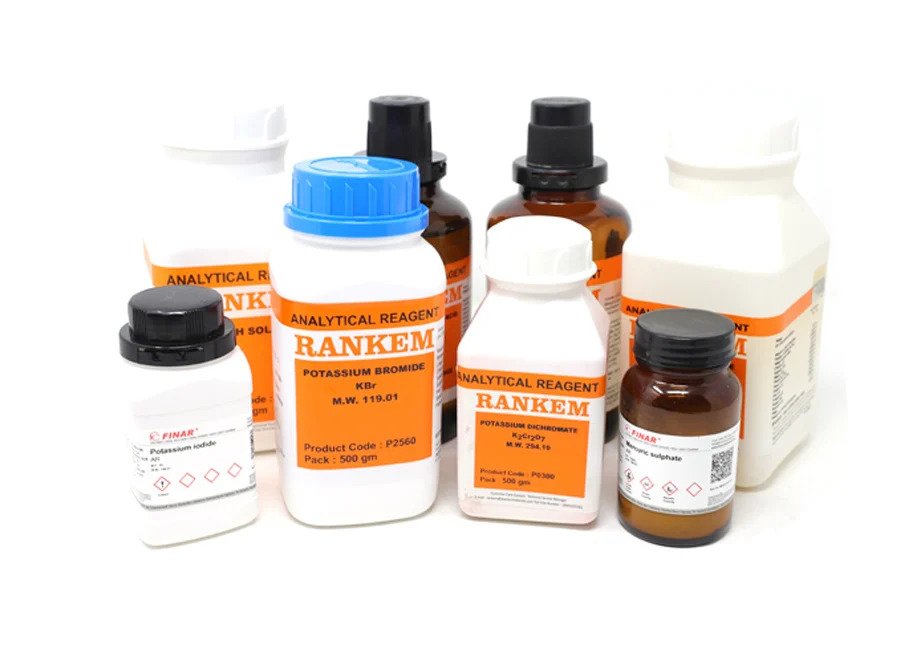
Description
Specifications Table
Product Name – Polyoxyethylene (20) sorbitan monolaurate BAKER™
Quantity/Pack Size – 500 ml
Form – Liquid
Grade – Laboratory
Application – Emulsifier, Solubilizer, Dispersant
Product Overview
Polyoxyethylene (20) sorbitan monolaurate, a premium-grade non-ionic surfactant from BAKER™, is engineered for high-performance emulsification, solubilization, and dispersion in laboratory settings. This compound, featuring 20 ethylene oxide (EO) units, ensures superior compatibility with both hydrophilic and lipophilic systems, making it ideal for complex formulations. Its low foaming properties and thermal stability enhance reproducibility in sensitive applications, while the laboratory-grade purity minimizes interference in analytical procedures. The liquid form allows for precise dosing and seamless integration into aqueous or organic solvents. As a versatile surfactant, it maintains consistent performance across a broad pH range (2-12), ensuring reliability in diverse experimental conditions. The 500 ml pack size provides an optimal balance between bulk efficiency and storage convenience, reducing the need for frequent reordering while maintaining freshness. Each batch undergoes rigorous quality control to meet international laboratory standards, guaranteeing lot-to-lot consistency for critical research workflows.
FAQs
1. What is the HLB value of this surfactant?
The HLB (Hydrophilic-Lipophilic Balance) value for Polyoxyethylene (20) sorbitan monolaurate is approximately 16.7, indicating strong hydrophilic characteristics suitable for oil-in-water emulsions.
2. Can this be autoclaved for sterilization?
Autoclaving is not recommended as high temperatures may degrade the polyoxyethylene chains, altering its surfactant properties. Use sterile filtration (0.22 µm) instead for microbial control.
3. Is this compatible with ionic surfactants?
Yes, but compatibility depends on concentration ratios. At low concentrations, it can synergize with anionic or cationic surfactants, but higher concentrations may lead to precipitation or phase separation.
4. What is the recommended storage temperature?
Store between 15-25°C in tightly sealed original containers, protected from light and moisture. Avoid freezing, as it may cause phase separation or viscosity changes.
5. How does this differ from Polysorbate 20?
While chemically similar, this product has a higher EO content (20 units vs. ~20 in Polysorbate 20) and is manufactured under stricter lab-grade protocols, resulting in lower impurity profiles for sensitive applications.