Description
Specifications Table
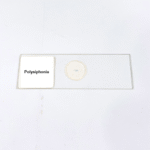
Product Name – Polysiphonia
Quantity/Pack Size – Single Slide
Form – Prepared Microscope Slide
Grade – Laboratory Grade
Application – Microscopic Examination of Algal Filament Structure
Product Overview
The Polysiphonia slide is a precisely prepared laboratory-grade specimen designed for detailed microscopic observation of red algal filaments. Each slide is crafted with uniform thin sections to provide clear visibility of cellular arrangement, branching patterns, and internal structures. The preparation involves advanced staining techniques to enhance contrast, highlighting key anatomical features for easy differentiation under varying magnifications. Mounted on durable glass, the slide is resistant to mechanical damage and maintains specimen integrity during repeated laboratory use. This ensures reliable and reproducible imaging for detailed examination of algal morphology. Its high-quality preparation supports compatibility with standard light microscopes, providing consistent optical clarity without distortion. The slide’s construction combines durability and precise visualization, allowing for extended usage while preserving delicate filamentous structures. Each specimen undergoes meticulous quality control to ensure uniform thickness, optimal staining, and accurate representation of cellular architecture. The Polysiphonia slide is ideal for laboratories requiring reliable and high-resolution observation of filamentous algae. Its professional-grade mounting and clear presentation enable accurate visualization of branch arrangement, cellular composition, and structural details. With a balance of clarity, durability, and optical performance, this slide remains a dependable tool for multiple microscopic studies and detailed analysis of Polysiphonia morphology.
1. What is the primary use of the Polysiphonia slide?
It is used for microscopic examination of red algal filaments and cellular morphology.
2. Is this slide compatible with standard laboratory microscopes?
Yes, it works effectively with all common light and compound microscopes.
3. Are there alternative slides for similar algal studies?
Yes, slides like Spirogyra or Ulothrix can be used as alternatives for filamentous algae observation.
4. How should the Polysiphonia slide be stored?
Keep it in a dry, dust-free slide box away from sunlight and moisture to preserve quality.
5. Where is the Polysiphonia slide sourced from?
It is sourced from trusted laboratory suppliers specializing in high-quality prepared microscope slides.