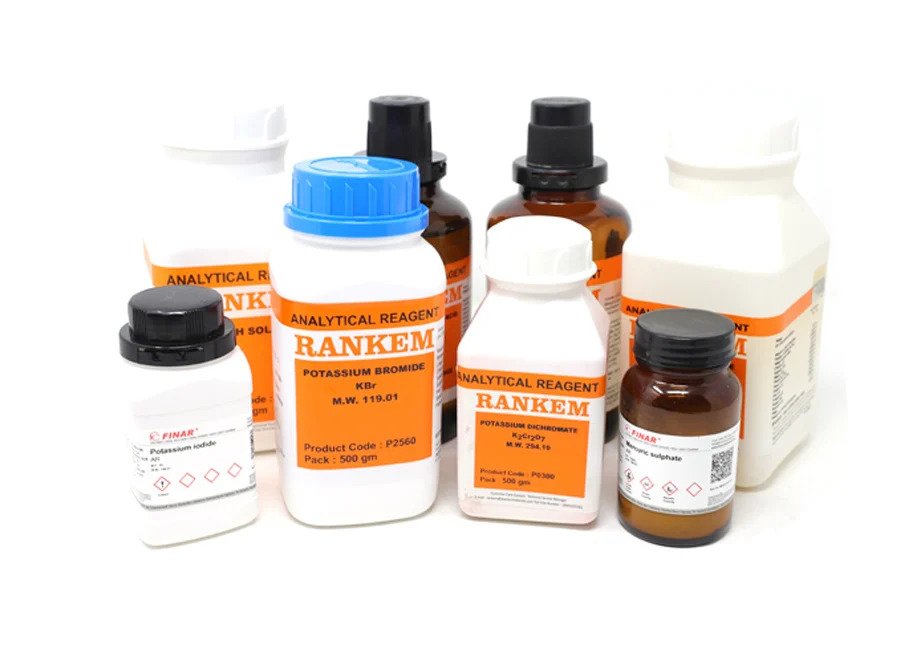
Description
Specifications Table
Product Name – Potassium persulfate BAKER ANALYZED™ reagent
Quantity/Pack Size – 500 g
Form – Crystalline powder
Grade – Reagent (BAKER ANALYZED™)
Application – Oxidizing agent, polymerization initiator, PCB etching
Product Overview
Potassium persulfate BAKER ANALYZED™ reagent is a high-purity, crystalline oxidizing agent widely recognized for its stability and consistent performance in laboratory applications. This reagent-grade compound is manufactured under stringent quality controls to ensure minimal impurities, making it a reliable choice for critical procedures. Its strong oxidizing properties stem from the persulfate ion (S₂O₈²⁻), which readily decomposes to generate sulfate radicals, facilitating reactions like polymerization, metal etching, and organic synthesis. The BAKER ANALYZED™ certification guarantees adherence to strict analytical standards, providing researchers with batch-to-batch consistency. The fine, free-flowing powder dissolves readily in water, offering ease of handling while maintaining reactivity. Its shelf stability under proper storage conditions further enhances its utility as a staple in chemical laboratories. Whether used as a radical initiator in polymer chemistry or as an etchant in electronics manufacturing, this potassium persulfate variant delivers reproducible results without residual contamination. The 500 g packaging balances practicality for frequent use with cost efficiency, catering to both small-scale experiments and larger procedural demands.
FAQs
1. What is the solubility of potassium persulfate in water?
Potassium persulfate is highly soluble in water, with a solubility of approximately 50 g/100 mL at 20°C. The dissolution process is exothermic, so gradual addition to water is recommended to avoid excessive heat buildup.
2. Can this reagent be used for PCB etching?
Yes, potassium persulfate is commonly employed as an etchant for printed circuit boards (PCBs), particularly for copper layers. The reagent’s oxidative action efficiently removes copper while leaving the substrate intact when used at appropriate concentrations and temperatures.
3. How should potassium persulfate be stored to maintain stability?
Store the reagent in a tightly sealed container, away from direct sunlight, moisture, and incompatible substances like organic materials or reducing agents. A cool, dry environment with temperatures below 30°C is ideal to prevent premature decomposition.
4. What safety precautions are necessary when handling this chemical?
Potassium persulfate is a strong oxidizer and should be handled with gloves, safety goggles, and a lab coat. Avoid inhalation of dust and ensure adequate ventilation. In case of skin or eye contact, rinse immediately with plenty of water and seek medical attention if irritation persists.
5. Are there any known incompatibilities with other laboratory chemicals?
This reagent is incompatible with strong reducing agents, organic compounds, and finely powdered metals, as reactions may generate heat, gas, or even combustion. Always check compatibility before mixing with other chemicals in experimental setups.