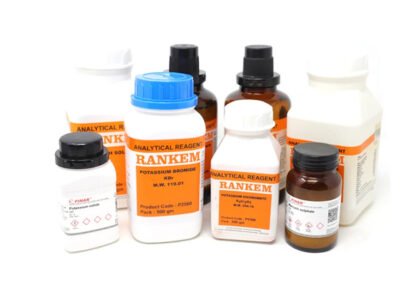
Description
Specifications Table
| Product Name | Potassium phosphate monobasic (potassium dihydrogen phosphate), anhydrous HPLC |
|---|---|
| Pack Size | 500 g |
| Form | Powder |
| Grade | HPLC |
| Application | Chromatography, buffer preparation, research |
Product Description
Potassium phosphate monobasic, also known as potassium dihydrogen phosphate, is a high-purity anhydrous salt widely used in laboratories for buffer solutions, chromatography, and biochemical applications. This HPLC-grade variant ensures minimal impurities, making it ideal for sensitive analytical techniques where consistency and accuracy are critical.
Whether you’re a student setting up experiments or a researcher requiring precise buffer systems, this product delivers reliable performance. The anhydrous form eliminates moisture-related variability, providing stable results in HPLC, electrophoresis, and other high-precision methods.
At eqipped, we source this product from Avantor, a trusted name in lab supplies, ensuring you receive a product that meets stringent quality standards. The 500 g pack size offers convenience for both small-scale and bulk applications, reducing the need for frequent reordering.
Upgrade your lab workflow with HPLC-grade potassium phosphate monobasic. Shop now for guaranteed purity and performance.
Key Applications
This versatile chemical finds use in multiple laboratory settings:
Buffer preparation for biochemical assays and molecular biology experiments.
Mobile phase component in HPLC and other chromatographic techniques.
pH adjustment in cell culture media and enzymatic reactions.
Standard reagent in analytical chemistry and quality control testing.
Why This Grade Matters
HPLC-grade potassium phosphate monobasic undergoes rigorous purification to remove trace metals, organic contaminants, and other impurities that could interfere with sensitive analyses. Unlike technical or industrial grades, this variant is specifically designed for applications where even minor impurities can skew results.
For researchers working with proteins, nucleic acids, or small molecules, using the correct grade ensures reproducibility and data integrity. The anhydrous form further enhances stability, preventing moisture absorption that could alter concentration or introduce variability.
Safety and Handling
While potassium phosphate monobasic is generally safe when handled properly, it’s important to follow standard lab practices:
Wear appropriate personal protective equipment (PPE), including gloves and safety goggles.
Avoid inhalation or ingestion. Work in a well-ventilated area or under a fume hood if processing large quantities.
Store in a cool, dry place away from incompatible substances like strong acids or oxidizing agents.
Need bulk quantities or custom packaging? Contact eqipped for tailored solutions to meet your lab’s specific requirements.
Risk Note
Potassium phosphate monobasic is generally non-hazardous but may cause mild skin or eye irritation. In case of contact, rinse thoroughly with water. For full safety information, refer to the product’s Safety Data Sheet (SDS) available upon request.
FAQs
What is the difference between anhydrous and hydrated potassium phosphate monobasic?
Anhydrous means the product contains no water molecules, offering better stability and longer shelf life. Hydrated forms include water in their crystal structure, which can affect concentration calculations.
Can this product be used for cell culture applications?
Yes, HPLC-grade potassium phosphate monobasic is suitable for cell culture media preparation, provided it’s sterilized appropriately before use.
How should I prepare a 1M buffer solution with this product?
Dissolve 136.09 g of potassium phosphate monobasic in 1 liter of deionized water, then adjust the pH as needed with potassium hydroxide or phosphoric acid.
Is this product compatible with mass spectrometry?
While HPLC-grade is highly pure, we recommend checking for specific ion interference in your MS application. For ultra-sensitive MS work, consider MS-grade reagents.
What’s the typical shelf life of this product?
When stored properly in its original container, the anhydrous form has a shelf life of 3-5 years. Always check the certificate of analysis for specific batch information.