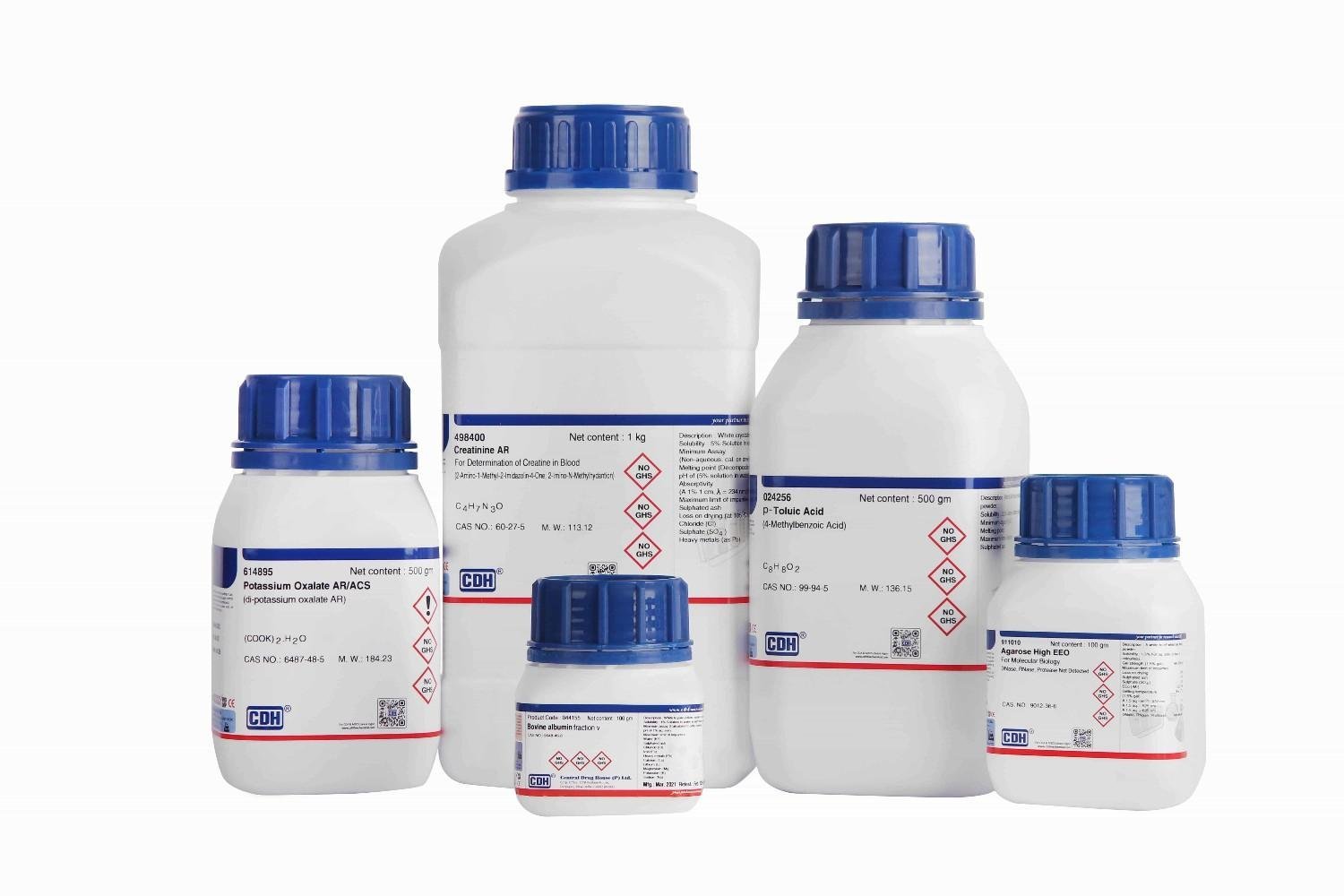
Description
Specifications Table
| Product Name | Pyridine for HPLC & Spectroscopy | 766500 | CDH |
|---|---|
| Quantity/Pack Size | 500ml |
| Form | Liquid |
| Grade | HPLC & Spectroscopy |
| Application | Chromatography, analytical testing, lab research |
Product Description
When precision matters in your lab work, the right solvent can make all the difference. Pyridine for HPLC and spectroscopy is a high-purity chemical designed for demanding analytical applications. Whether you’re running chromatography tests or conducting spectroscopic analysis, this grade ensures minimal interference and reliable results.
HPLC grade pyridine is a staple in research labs and educational institutions across India. Its low UV absorbance and high purity make it ideal for sensitive detection methods. Researchers trust this solvent for its consistency, which is critical when reproducibility is non-negotiable.
At eqipped, we understand the needs of students, educators, and researchers. That’s why we source only the best reagents, so you can focus on your experiments without worrying about solvent quality. This pyridine variant meets stringent analytical standards, giving you confidence in every run.
From academic projects to professional research, having the right chemicals on hand is essential. With eqipped, you get more than just a supplier—you get a partner committed to supporting India’s scientific community with quality lab essentials.
Upgrade your lab’s solvent inventory today. Buy HPLC grade pyridine online and experience the difference purity makes.
FAQs
What makes HPLC grade pyridine different from regular pyridine?
HPLC grade undergoes additional purification steps to remove impurities that could interfere with chromatographic separation or spectroscopic analysis. It has lower UV absorbance and fewer contaminants compared to technical grades.
Can I use this pyridine for GC analysis?
While primarily designed for HPLC and spectroscopy, this grade’s high purity makes it suitable for many GC applications. However, always verify compatibility with your specific method and instrument requirements.
How should I store this chemical?
Store in a tightly sealed container in a cool, dry place. Keep away from oxidizing agents and strong acids. Follow standard laboratory storage protocols for flammable liquids.
Is this product suitable for student lab experiments?
Yes, this grade is commonly used in educational settings for chromatography demonstrations and spectroscopy practicals. Its reliability makes it ideal for teaching environments.
What’s the typical shelf life of this pyridine?
When stored properly, unopened containers maintain quality for 2-3 years. After opening, use within 12 months for best results. Always check for signs of degradation before use.