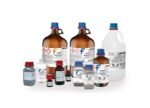
Description
Specifications Table
Product Name – Selenium, AAS standard solution, Specpure®, Se 1000µg/ml
Quantity/Pack Size – 100ml, 500ml
Form – Liquid (aqueous solution in nitric acid)
Grade – Specpure® (ultra-high purity, 99.999% trace metals basis)
Application – Atomic Absorption Spectroscopy (AAS), ICP-OES, trace metal analysis, calibration standards
Product Overview
This Specpure® Selenium AAS standard solution delivers unmatched purity and consistency for demanding trace metal analysis applications. Formulated at a concentration of 1000µg/ml in a stabilized nitric acid matrix, it eliminates common interferences while ensuring long-term stability and minimal background noise. The solution undergoes rigorous multi-stage purification to achieve Specpure® grade (99.999% trace metals basis), making it ideal for creating calibration curves in atomic absorption spectroscopy (AAS) and inductively coupled plasma optical emission spectrometry (ICP-OES). Each batch is accompanied by a certificate of analysis with NIST-traceable values, guaranteeing accuracy across low ppb to ppm detection ranges. The solution’s homogeneous composition prevents precipitation or concentration gradients during storage, while its acidified base resists microbial contamination. Compatible with most autosamplers and nebulizers, this standard solution reduces instrument downtime by minimizing clogging risks associated with particulate contaminants. The 100ml and 500ml pack sizes provide flexibility for both routine laboratory use and high-throughput applications, with the larger volume offering cost efficiency for frequent users. The solution’s extended shelf life of 24 months when stored properly ensures reliable performance over prolonged analytical campaigns.
FAQs
1. What is the matrix composition of this selenium standard solution?
The solution is prepared in 2-5% high-purity nitric acid, which serves as both a stabilizer and solvent for the selenium. This acid matrix is specifically chosen to match common digestion protocols used in trace metal analysis, ensuring compatibility with most sample preparation workflows without requiring additional dilution steps.
2. Can this standard be used for ICP-MS applications?
While primarily designed for AAS and ICP-OES, this Specpure® solution can be used for ICP-MS after appropriate dilution. The ultra-low impurity profile (with most contaminants below 10 ppb) makes it suitable for ICP-MS, though users should verify the final concentration falls within their instrument’s optimal working range and account for potential polyatomic interferences from the nitric acid matrix.
3. How does the Specpure® grade differ from standard analytical grades?
Specpure® grade undergoes an additional three-stage purification process that reduces trace metal contaminants to sub-ppb levels for most elements. Unlike standard analytical grades that may contain up to 100 ppm of certain impurities, Specpure® materials are certified to have less than 1 ppm total metallic impurities, with individual contaminants typically below 10 ppb. This purification level is critical for analyzing ultra-trace selenium concentrations in environmental or biological samples where background interference must be minimized.
4. What is the recommended storage protocol to maintain stability?
Store the unopened bottle at 15-25°C in its original packaging, away from direct sunlight and sources of heat. Once opened, tightly recap the bottle after each use and store upright to prevent leakage. The solution remains stable for 24 months from the date of manufacture when stored properly. For extended storage periods, consider transferring smaller aliquots to amber glass vials to minimize exposure to oxygen and potential contamination during repeated access.
5. Are there any known incompatibilities with common lab materials?
The nitric acid matrix may react with certain metals like aluminum or copper over prolonged contact, potentially introducing contaminants. Use only PTFE, PP, or borosilicate glass containers and pipettes when handling this solution. Avoid using rubber stoppers or tubing, as the acid can leach organic compounds that may interfere with selenium detection at trace levels. For dilution, use only ultrapure water (18.2 MΩ·cm) and acid-washed volumetric glassware to maintain the solution’s integrity.