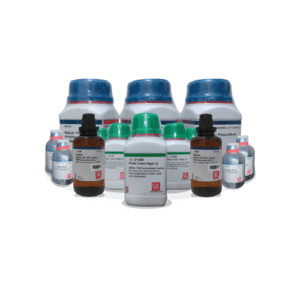
Description
Specifications Table
| Product Name | Silica Gel 230-400 mesh | 96671 | SRL Chem |
|---|---|
| Quantity/Pack Size | 500 Gms, 5 Kg, 25 Kg |
| Form | Granular |
| Grade | Chromatography |
| Application | Column chromatography, purification, separation |
Product Description
Silica gel 230-400 mesh is a high-performance adsorbent widely used in laboratories for chromatography applications. Its fine particle size ensures excellent separation efficiency, making it ideal for purifying organic compounds, natural products, and pharmaceutical intermediates. Whether you’re a student setting up a basic chromatography experiment or a researcher working on complex separations, this silica gel delivers consistent results.
The 96671 grade from SRL Chem is known for its uniformity and high surface area, which enhances adsorption capacity. It’s commonly used in flash chromatography, thin-layer chromatography (TLC), and column chromatography. The mesh size of 230-400 ensures optimal flow rates while maintaining high resolution, making it a preferred choice in academic and industrial labs.
If you’re looking to buy silica gel for chromatography, this product is a reliable option. It’s also used in moisture absorption applications, though its primary strength lies in analytical separations. For bulk purchases, eqipped offers competitive pricing and fast shipping across India.
Why Silica Gel 230-400 Mesh is Essential for Labs
In chromatography, the choice of silica gel directly impacts separation efficiency. The 230-400 mesh size strikes a balance between flow rate and resolution, preventing clogging while ensuring sharp peaks. This makes it suitable for both small-scale experiments and large-scale purifications.
Researchers often prefer this grade for its reproducibility. Unlike coarser silica gels, the fine particles provide better interaction with analytes, improving separation quality. It’s also compatible with a wide range of solvents, making it versatile for different chromatographic techniques.
For students, this silica gel is easy to handle and pack into columns, reducing the learning curve in lab experiments. Educators can rely on its consistent performance for teaching chromatography principles effectively.
Applications of Silica Gel 230-400 Mesh
This silica gel is primarily used in:
- Column chromatography for organic compound purification
- Flash chromatography for quick separations
- Thin-layer chromatography (TLC) as a stationary phase
- Moisture absorption in sensitive lab environments
- Pharmaceutical and natural product isolation
Its high surface area and uniform pore structure make it effective in adsorbing impurities, ensuring cleaner eluents in chromatographic processes.
Handling and Storage
Silica gel is non-toxic but should be handled with care to avoid inhalation. Store it in a cool, dry place in a tightly sealed container to prevent moisture absorption before use. For best results, activate the silica gel by heating it at 105°C for 2 hours before chromatography.
Risk Note
While silica gel is generally safe, avoid inhaling fine particles. Use in a well-ventilated area or under a fume hood when handling large quantities.
FAQs
What is the difference between silica gel 60-120 mesh and 230-400 mesh?
Silica gel 60-120 mesh has larger particles, suitable for gravity-based chromatography, while 230-400 mesh is finer, offering better resolution in flash and column chromatography.
Can this silica gel be reused?
Yes, silica gel can be regenerated by washing with a suitable solvent and reactivating it by heating at 105°C for 2 hours.
Is this silica gel suitable for TLC?
Yes, silica gel 230-400 mesh is commonly used as a stationary phase in thin-layer chromatography for qualitative analysis.
What solvents work best with this silica gel?
Polar solvents like methanol, ethanol, and ethyl acetate are commonly used, but the choice depends on the compounds being separated.
How much silica gel do I need for a standard chromatography column?
A typical column uses a 10:1 ratio of silica gel to sample weight. For example, 10 grams of silica gel for 1 gram of sample.