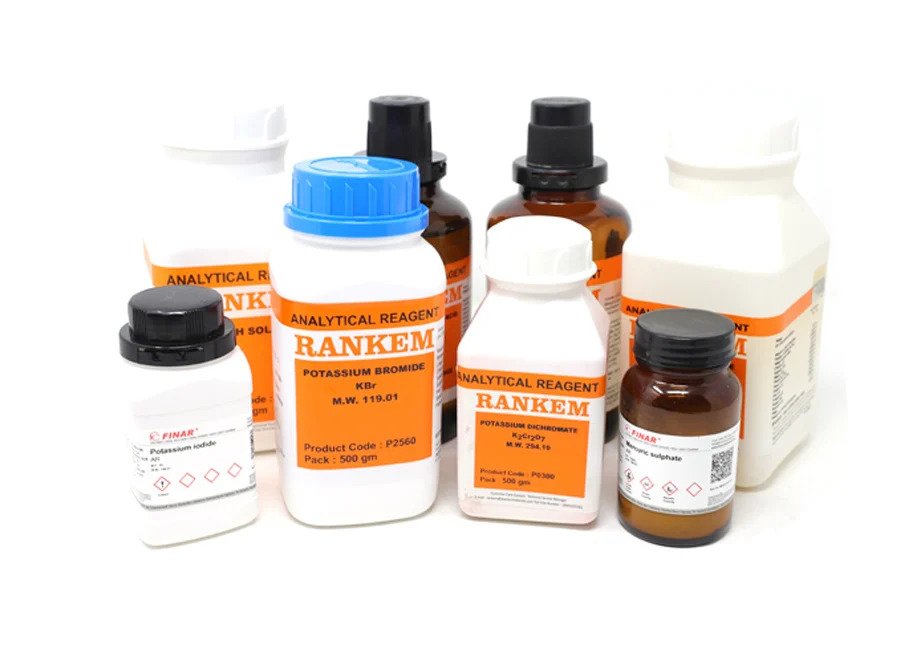
Description
Specifications Table
Product Name – Silicone grease, high vacuum LR
Quantity/Pack Size – 50 g | 100 g | 250 g
Form – Grease
Grade – LR (Laboratory Reagent)
Application – High vacuum systems, O-rings, stopcocks, and glassware lubrication
Product Overview
This high vacuum silicone grease is a premium LR-grade lubricant engineered for demanding laboratory environments. Formulated with ultra-pure silicone, it maintains stability under extreme temperatures (-40°C to 200°C) without hardening or liquefying. Its waterproof and chemically inert properties prevent contamination in sensitive applications, making it ideal for sealing vacuum systems, O-rings, and glass joints. The non-reactive composition ensures compatibility with most lab materials, including rubber, plastic, and metal, while its low vapor pressure minimizes outgassing in vacuum conditions. Unlike hydrocarbon-based greases, this silicone variant resists oxidation and degradation, extending equipment lifespan. The smooth, non-tacky texture allows precise application without residue buildup. Each batch undergoes rigorous purity testing to meet laboratory reagent standards, guaranteeing consistent performance in critical setups. The grease’s versatility extends to cryogenic applications, where it retains flexibility without cracking. Its neutral odor and non-toxic formulation make it safe for prolonged use in enclosed lab spaces. The 50g, 100g, and 250g packaging options cater to varying usage frequencies, from occasional maintenance to bulk applications in research facilities.
FAQs
1. What makes this silicone grease suitable for high vacuum applications?
The grease has an exceptionally low vapor pressure, which prevents outgassing that could compromise vacuum integrity. Its silicone base remains stable under pressure fluctuations.
2. Can this grease be used on plastic components without causing degradation?
Yes, it’s chemically inert and compatible with most plastics, including PTFE, polycarbonate, and acrylic, without causing swelling or embrittlement over time.
3. How does this compare to hydrocarbon-based vacuum greases?
Unlike hydrocarbon greases that may oxidize or evaporate, this silicone version maintains consistency across a wider temperature range and doesn’t react with oxygen or moisture.
4. What’s the shelf life when stored unopened?
When kept in its original sealed container at room temperature, the grease retains its properties for up to 5 years from the date of manufacture.
5. Is this grease autoclavable for sterile applications?
While it can withstand autoclaving temperatures, we recommend spot-testing as prolonged steam exposure may slightly alter its viscosity in some cases.