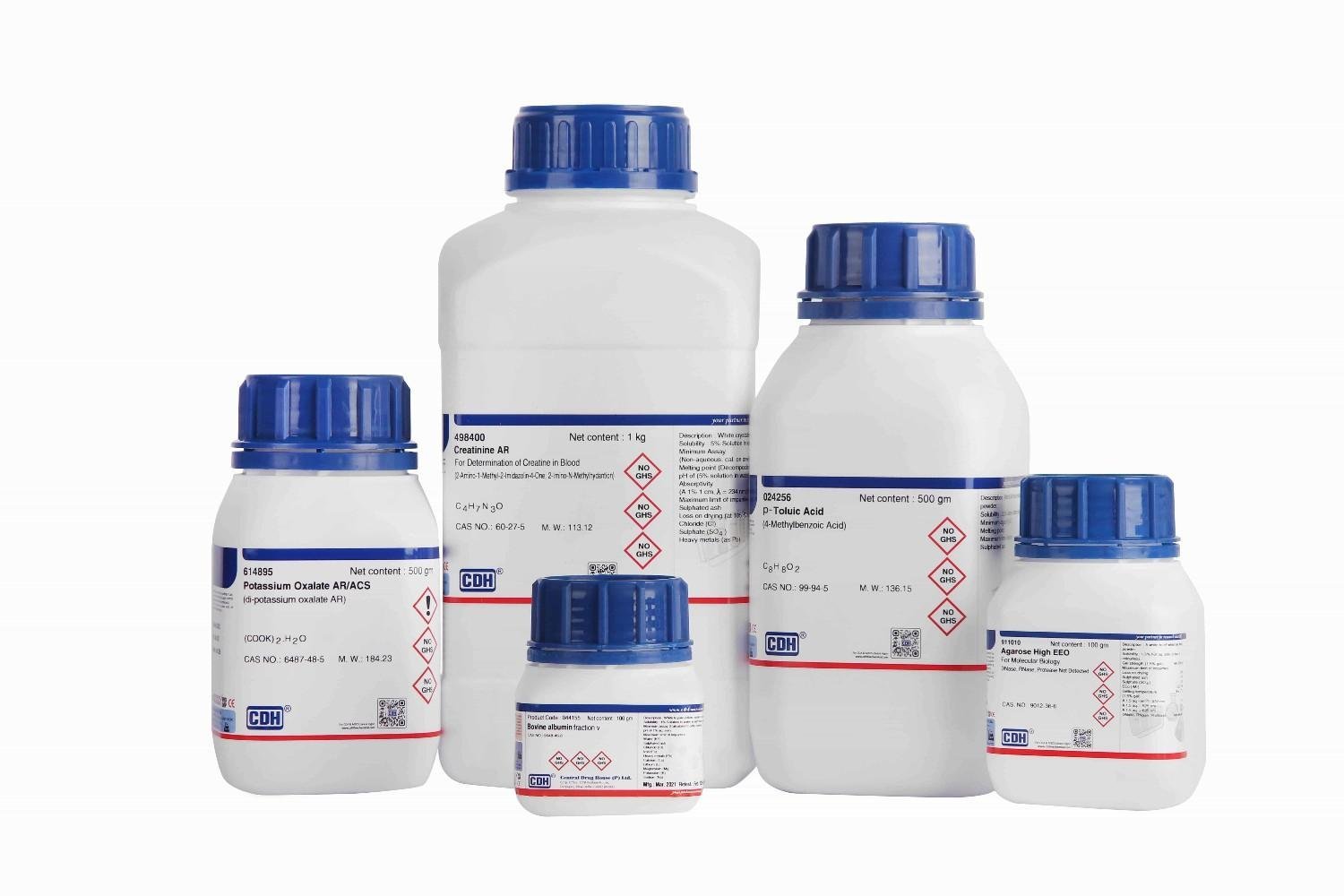
Description
Specifications Table
| Product Name | Sodium Carbonate (Anhydrous) AR 99.5–100.5% |
|---|---|
| Pack Size | 500 gm, 5 kg |
| Form | White crystalline powder |
| Grade | AR (Analytical Reagent) |
| Application | Laboratory reagent, pH buffering, titrations, chemical synthesis |
Product Description
Sodium Carbonate (Anhydrous) is a fundamental laboratory chemical known for its versatility in analytical and research applications. With an AR grade purity of 99.5–100.5%, this high-quality reagent ensures accurate results in titrations, pH adjustments, and buffering solutions. Its anhydrous form eliminates moisture-related inconsistencies, making it a reliable choice for precise experiments.
Commonly used in educational labs, research facilities, and industrial settings, Sodium Carbonate (Anhydrous) serves as a standard base in acid-base reactions. Whether you’re preparing solutions for qualitative analysis or conducting quantitative assays, this chemical delivers consistent performance. Its solubility in water and stability under controlled conditions further enhance its utility in diverse protocols.
At eqipped, we prioritize quality and authenticity, sourcing chemicals from trusted manufacturers like CDH to meet the stringent demands of scientific work. Our packaging ensures product integrity, while our streamlined delivery process gets your supplies to you quickly.
Need high-purity Sodium Carbonate for your lab? Buy Sodium Carbonate (Anhydrous) AR grade online today and experience seamless procurement.
Applications of Sodium Carbonate (Anhydrous) in Laboratories
This chemical finds extensive use in:
- Acid-base titrations as a primary standard
- Buffering solutions for biochemical assays
- Preparation of standard solutions in analytical chemistry
- Neutralization reactions in environmental testing
- Synthesis of other sodium compounds
Its role in educational labs is equally critical, helping students understand fundamental chemical principles through hands-on experiments. Researchers rely on its consistency for reproducible data in quantitative analysis.
Handling and Storage Guidelines
While Sodium Carbonate (Anhydrous) is generally safe, proper handling ensures longevity and safety:
- Store in a cool, dry place away from moisture and incompatible substances
- Use in a well-ventilated area to avoid dust inhalation
- Wear appropriate PPE (gloves, goggles) when handling
- Keep containers tightly sealed to prevent contamination
For bulk requirements or institutional orders, eqipped offers competitive pricing and tailored solutions. Our customer support team is available to assist with technical queries or custom packaging needs.
Why This Grade Matters
AR (Analytical Reagent) grade chemicals undergo rigorous testing to meet strict purity standards. This ensures minimal impurities that could interfere with sensitive assays or spectroscopic analyses. For labs where precision is non-negotiable, choosing AR grade Sodium Carbonate guarantees reliable outcomes.
Upgrade your lab inventory with premium Sodium Carbonate (Anhydrous). Shop now for fast, hassle-free delivery across India.
FAQs
What is the difference between anhydrous and hydrated Sodium Carbonate?
Anhydrous Sodium Carbonate contains no water molecules, making it ideal for applications requiring precise stoichiometry. Hydrated forms (like decahydrate) include bound water, which may affect calculations in analytical work.
Can this be used for food or pharmaceutical applications?
No, this AR grade product is intended solely for laboratory use. Food or pharmaceutical grades require additional certifications and purity levels not covered by this specification.
How should I dispose of unused Sodium Carbonate?
Follow local laboratory waste disposal guidelines. Neutralize with a weak acid (like acetic acid) if required, then dispose of as non-hazardous chemical waste.
Is this product suitable for pH calibration?
Yes, its high purity makes it excellent for preparing pH buffer solutions. However, always verify compatibility with your specific pH meter calibration protocols.
What safety precautions are recommended?
While generally low-risk, avoid eye/skin contact and inhalation of dust. Use in a fume hood if handling large quantities. Refer to the SDS for detailed safety information.
Risk Note
Sodium Carbonate (Anhydrous) is classified as an irritant. Avoid contact with eyes, skin, and clothing. In case of contact, rinse immediately with plenty of water. Wear suitable protective equipment when handling.