Description
Specifications Table
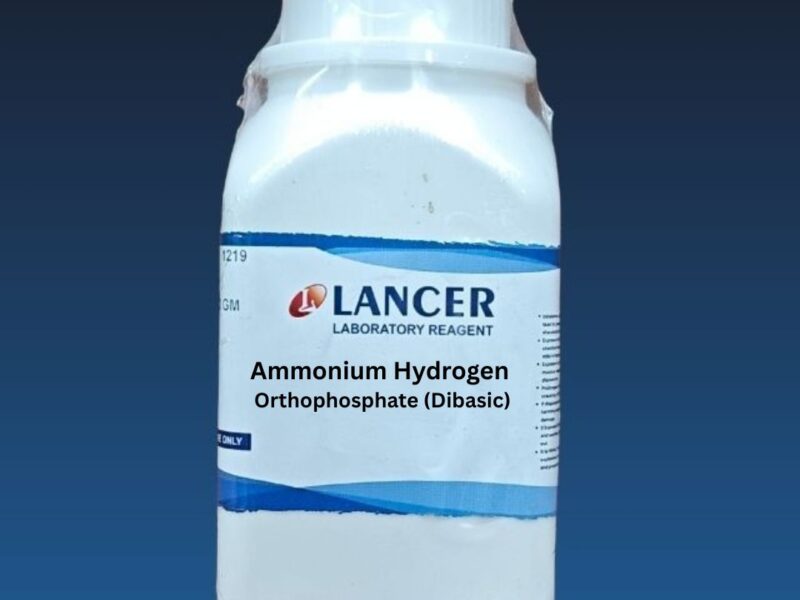
Product Name – Sodium phosphate dibasic (disodium hydrogen orthophosphate), dihydrate LR
Quantity/Pack Size – 500 g
Form – Crystalline powder
Grade – Laboratory Reagent (LR)
Application – Buffering agent, biochemical research, crystallization
Product Overview
Sodium phosphate dibasic (disodium hydrogen orthophosphate), dihydrate LR is a high-purity, water-soluble crystalline powder designed for laboratory applications requiring precise pH control and buffering. With a minimum assay of 99%, this LR-grade reagent ensures reliable performance in biochemical assays, protein crystallization, and molecular biology protocols. Its dihydrate form provides enhanced stability during storage while maintaining consistent solubility in aqueous solutions. The compound’s non-toxic, non-flammable nature makes it safe for routine lab handling, though standard PPE is recommended. Compatible with most aqueous systems, it serves as a critical component in phosphate-buffered saline (PBS) formulations and enzymatic reactions. The reagent undergoes rigorous quality checks to eliminate heavy metal contaminants, ensuring interference-free results in sensitive applications. Store in a cool, dry place in tightly sealed containers to prevent moisture absorption and caking. Ideal for researchers and institutions prioritizing reproducibility and accuracy in experimental workflows.
FAQs
1. What is the solubility of Sodium Phosphate Dibasic LR in water?
Sodium phosphate dibasic LR is highly soluble in water, with a solubility of approximately 85 g/L at 20°C, forming a clear, colorless solution.
2. Can this reagent be used for preparing phosphate-buffered saline (PBS)?h4>
Yes, this LR-grade sodium phosphate dibasic is suitable for PBS preparation when combined with sodium chloride and other required components in the correct proportions.
3. What is the shelf life of this product when stored properly?
The product retains its specified purity for up to 3 years from the date of manufacture when stored in a tightly sealed container away from moisture and direct sunlight.
4. Are there any known incompatibilities with other lab chemicals?
This reagent is incompatible with strong acids and alkaline earth metals like calcium or magnesium, which may cause precipitation of insoluble phosphates.
5. How does the dihydrate form differ from the anhydrous version in applications?
The dihydrate form offers better stability during storage and is preferred for applications where precise hydration levels are critical, though both forms are functionally equivalent once dissolved.