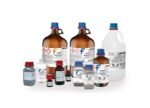
Description
Specifications Table
Product Name – Sodium, plasma standard solution, Specpure®, Na 1000µg/ml
Quantity/Pack Size – 50ml, 100ml, 500ml
Form – Liquid (aqueous solution)
Grade – Specpure® (ultra-high purity, ICP-MS/ICP-OES grade)
Application – Calibration standard for sodium analysis in plasma, serum, or environmental samples via ICP-OES, AAS, or ICP-MS
Product Overview
This Specpure® sodium plasma standard solution delivers a certified concentration of 1000µg/ml sodium (Na) in a stabilized aqueous matrix, designed for high-accuracy instrumental analysis. Manufactured under ISO 17034 and ISO/IEC 17025 standards, the solution undergoes rigorous multi-point calibration and homogeneity testing to ensure lot-to-lot consistency, eliminating variability in analytical workflows. The ultra-low impurity profile (with contaminant levels <10 ppb for most metals) makes it ideal for trace-level sodium determinations in complex matrices like biological fluids, environmental waters, or food extracts. The solution is supplied in HDPE bottles with tamper-evident seals to prevent contamination during storage or transport. Each batch includes a comprehensive Certificate of Analysis (CoA) with uncertainty statements, expiry date, and traceability to NIST SRMs, guaranteeing compliance with GLP/GMP requirements. The pH-buffered formulation (pH ~2-3) enhances long-term stability, with a shelf life of 24 months when stored at 15–25°C. Compatible with autodiluters and automated ICP systems, this standard minimizes matrix effects and reduces sample preparation time, optimizing lab efficiency without compromising data integrity.
FAQs
1. What is the matrix composition of this sodium plasma standard solution?
The solution is prepared in a dilute nitric acid matrix (typically 2–5% v/v HNO₃) to ensure complete dissolution of sodium and prevent precipitation. The acidic medium also enhances stability and compatibility with ICP instrumentation.
2. Can this standard be used for flame atomic absorption spectroscopy (FAAS)?
Yes, the 1000µg/ml concentration is suitable for FAAS after appropriate dilution. The low viscosity and absence of organic solvents make it compatible with nebulizer-based systems, though matrix matching may be required for complex samples.
3. How does the Specpure® grade differ from standard analytical-grade solutions?
Specpure® standards undergo additional purification steps to reduce trace metal contaminants (e.g., K, Ca, Mg) to sub-ppb levels, critical for ultra-trace analysis. The certification process includes uncertainty quantification at 95% confidence intervals, unlike generic analytical-grade products.
4. What is the recommended dilution protocol for preparing working standards?
For ICP-OES, a 1:100 dilution with 2% HNO₃ yields a 10µg/ml working standard. Use Class A volumetric glassware and ultra-pure water (18.2 MΩ·cm) to maintain accuracy. Avoid plastic pipettes for dilutions below 1µg/ml to prevent leaching.
5. Are the bottles amber-colored to prevent photodegradation?
The HDPE bottles are translucent white, as sodium in aqueous solution is not light-sensitive. However, the bottles are opaque enough to minimize potential UV exposure during prolonged storage, with no measurable degradation observed under standard lab lighting.