Description
Specifications Table
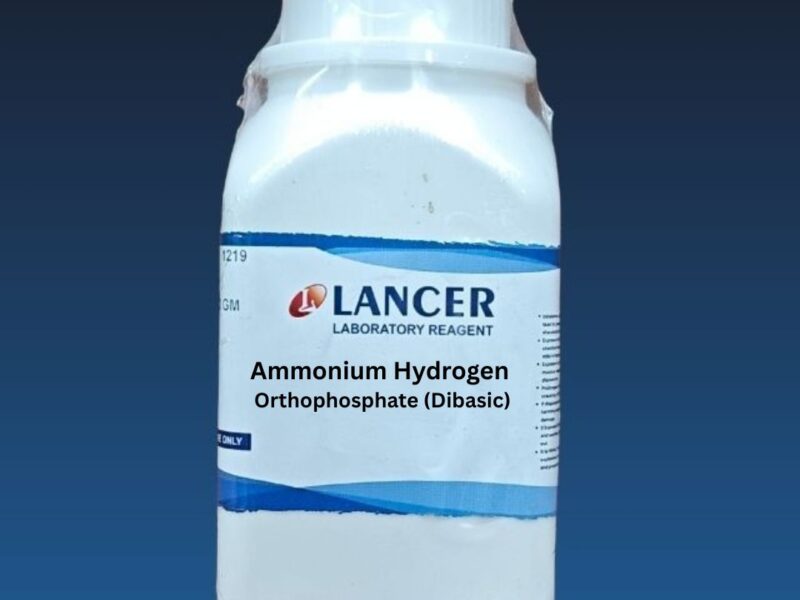
Product Name – Sodium pyrophosphate decahydrate, 99+%, for analysis
Quantity/Pack Size – 25GR, 500GR, 2.5KG, 10KG
Form – Crystalline powder
Grade – 99%+ (Analytical grade)
Application – Buffering agent, detergent additive, lab reagent
Product Overview
Sodium pyrophosphate decahydrate (Na₄P₂O₇·10H₂O) is a high-purity, water-soluble inorganic compound widely used in laboratories for its buffering and chelating properties. With a minimum assay of 99%, this analytical-grade reagent ensures reliable performance in sensitive applications. Its crystalline structure dissolves readily in water, forming stable solutions that resist hydrolysis under controlled conditions. The decahydrate form provides consistent stoichiometry, making it ideal for precise formulations in research and testing environments. As a non-toxic, non-flammable compound, it offers safe handling while maintaining excellent thermal stability up to 100°C. The product’s low heavy metal content (<0.001%) and negligible chloride impurities prevent interference in analytical procedures. Its pH-regulating capabilities (pH 10-11 in solution) make it particularly valuable for maintaining alkaline conditions in experimental setups. The fine, free-flowing powder ensures accurate weighing and homogeneous mixing in laboratory preparations.
FAQs
1. What is the solubility of sodium pyrophosphate decahydrate in water at room temperature?
Approximately 60 g/L at 20°C, increasing significantly with temperature to about 150 g/L at 60°C.
2. Can this product be used as a food-grade additive?
This analytical-grade version is not certified for food applications; food-grade sodium pyrophosphate requires different purity standards.
3. What’s the difference between decahydrate and anhydrous forms?
The decahydrate contains 10 water molecules per formula unit, offering better solubility but lower phosphate content by weight compared to anhydrous.
4. How should I store opened containers to maintain quality?
Keep tightly sealed in original packaging at room temperature, protected from moisture and direct sunlight.
5. What’s the typical shelf life when stored properly?
Unopened containers maintain specifications for 3 years; opened containers remain stable for 1 year with proper resealing.