Description
Specifications Table
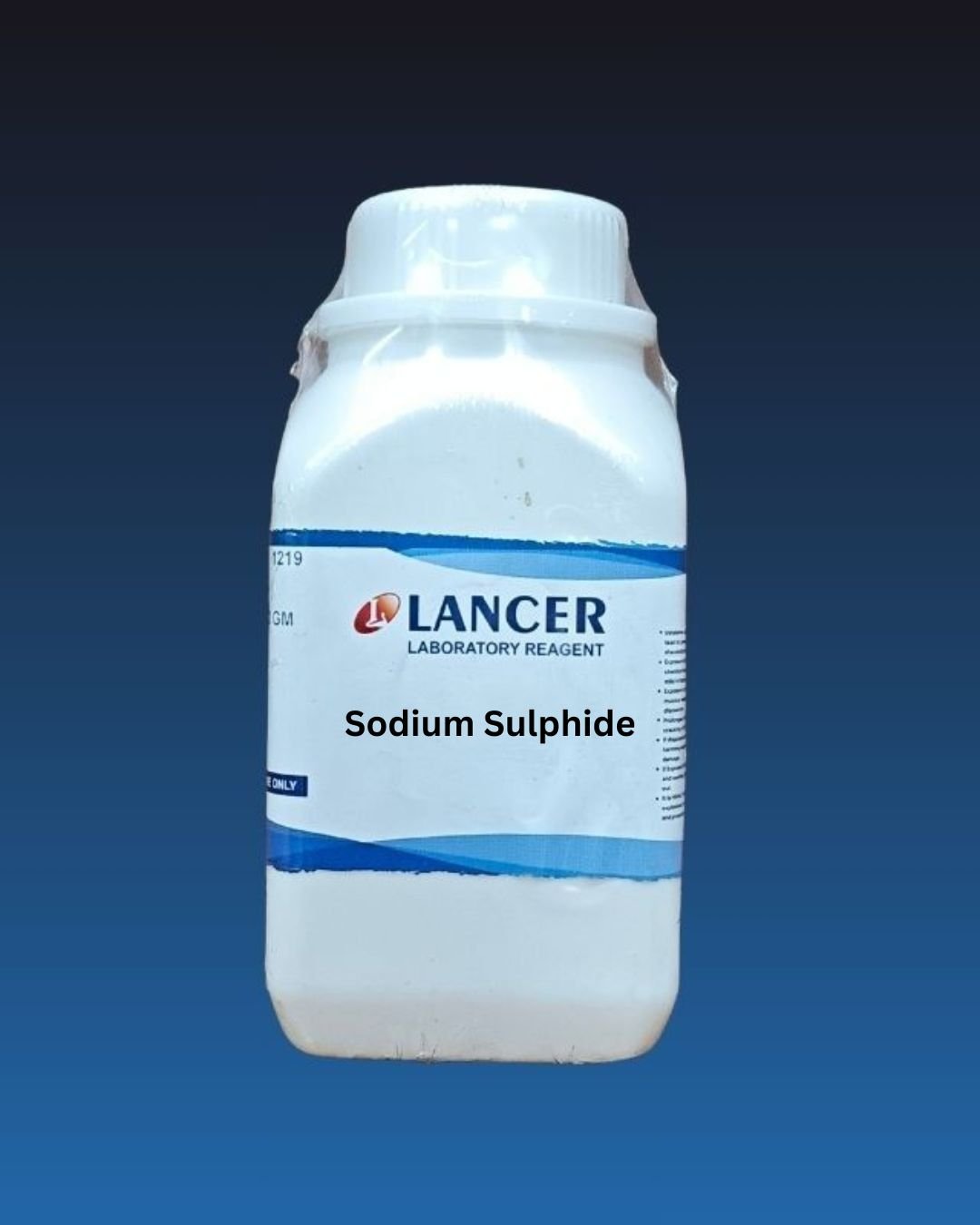
Product Name – Sodium Sulphide
Quantity/Pack Size – 500 gm
Form – Powder
Grade – Laboratory Grade
Application – Chemical synthesis, analytical testing
Product Overview
Sodium sulphide is a versatile inorganic compound widely used in laboratory settings for its strong reducing properties and solubility in water. This high-purity, laboratory-grade sodium sulphide is meticulously processed to ensure minimal impurities, making it suitable for sensitive chemical reactions and analytical procedures. Its fine powder form allows for easy dissolution and precise measurement, facilitating accurate experimental outcomes. The compound is particularly valued in qualitative analysis, where it serves as a key reagent for detecting metal ions through precipitation reactions. Additionally, its role in sulfur-based synthesis and as a reducing agent in organic chemistry makes it indispensable in research and educational laboratories. The product is packaged in a secure, airtight container to maintain stability and prevent moisture absorption, ensuring long-term reliability. Whether used in small-scale experiments or larger batch processes, this sodium sulphide delivers consistent performance, adhering to strict quality standards for laboratory chemicals.
FAQs
1. What is the shelf life of sodium sulphide?
When stored in a cool, dry place in its original packaging, sodium sulphide has a shelf life of approximately 2 years. Proper sealing is essential to prevent oxidation.
2. Is this sodium sulphide suitable for industrial applications?
This product is laboratory-grade and optimized for research and educational use. For industrial applications, a technical or industrial grade may be more appropriate.
3. How should I handle sodium sulphide safely?
Wear protective gloves, goggles, and a lab coat. Avoid inhalation and direct skin contact. Work in a well-ventilated area or under a fume hood.
4. Can this product be used in aqueous solutions?
Yes, sodium sulphide is highly soluble in water, forming a strongly alkaline solution. Ensure proper pH adjustments if required for your experiment.
5. What alternatives exist if sodium sulphide is unavailable?
Depending on the application, sodium hydrosulfide or ammonium sulfide may serve as substitutes, though reactivity and solubility may vary.