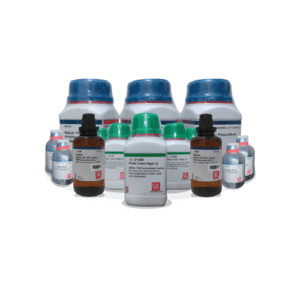
Description
Specifications Table
| Product Name | trans-1,2-Diaminocyclohexane-N,N,N,N Tetraacetic Acid Monohydrate extrapure AR (CDTA), 99% |
|---|---|
| Pack Size | 10 Gms – 25 Gms – 100 Gms – 500 Gms |
| Form | Powder |
| Grade | Extrapure AR |
| Application | Chelating agent in analytical chemistry, research, and industrial processes |
Product Description
When your research demands precision, trans-1,2-Diaminocyclohexane-N,N,N,N Tetraacetic Acid Monohydrate (CDTA) from eqipped delivers unmatched purity and performance. This extrapure AR-grade chelating agent is designed for scientists and analysts who need consistent, reliable results in complexation studies, metal ion analysis, and buffer preparations.
CDTA, with its unique cyclohexane backbone, offers superior selectivity for certain metal ions compared to traditional EDTA derivatives. The 99% purity ensures minimal interference in sensitive assays, making it ideal for applications in environmental testing, pharmaceutical research, and advanced materials science.
Whether you’re working in a university lab, research institute, or quality control facility, this laboratory-grade CDTA provides the consistency your protocols require. The monohydrate form maintains stability during storage while offering excellent solubility in aqueous solutions.
For researchers who refuse to compromise on quality, this CDTA monohydrate is the smart choice for your next experiment.
At eqipped, we understand that your work depends on reliable reagents. That’s why we’ve sourced this CDTA to meet the strictest analytical standards, so you can focus on your discoveries rather than your supplies.
FAQs
What makes CDTA different from EDTA?
CDTA features a cyclohexane ring structure that provides different metal ion selectivity compared to EDTA. It often shows stronger binding with certain transition metals and different pH dependencies, making it useful in applications where EDTA might not be optimal.
Can I use this CDTA for food analysis?
While this extrapure AR grade CDTA is highly pure, it’s not specifically certified for food analysis. For food testing applications, you should use reagents that meet relevant food safety standards and certifications.
How should I dispose of unused CDTA?
Follow your institution’s chemical waste disposal protocols. CDTA solutions can typically be neutralized and disposed of as non-hazardous waste, but always check local regulations and your laboratory’s specific guidelines.
What’s the shelf life of this CDTA?
When stored properly in its original container, this CDTA monohydrate maintains its specified purity for at least 24 months from the date of manufacture. The exact shelf life may vary based on storage conditions.
Can I get a certificate of analysis for this product?
Yes, eqipped provides certificates of analysis for all our laboratory-grade chemicals. You can request this documentation when placing your order or contact our customer service team after purchase.