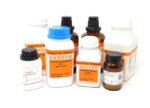
Description
Specifications Table
Product Name – Trifluoroacetic acid
Quantity/Pack Size – 100 ml
Form – Liquid
Grade – 99%+ (HPLC Grade)
Application – Peptide synthesis, HPLC, organic chemistry
Product Overview
Trifluoroacetic acid (TFA) is a highly versatile and potent organic acid widely used in laboratory settings due to its strong acidity and volatility. With a purity of 99% or higher, this HPLC-grade reagent ensures reliable and reproducible results in critical applications like peptide synthesis, where it acts as a deprotection agent. Its low boiling point allows for easy removal post-reaction, minimizing contamination risks. TFA is also a preferred solvent and catalyst in organic chemistry, particularly in esterification and protection group manipulations. The liquid form ensures convenient handling and precise dosing, while its compatibility with most organic solvents enhances its utility in chromatographic techniques. Stored in airtight containers, TFA maintains stability over extended periods, provided it is kept away from moisture and incompatible materials. This reagent is indispensable for researchers requiring high-purity acids for sensitive reactions and analytical procedures.
FAQs
1. What is the shelf life of trifluoroacetic acid?
When stored in a tightly sealed container at room temperature, trifluoroacetic acid remains stable for at least 2 years. Avoid exposure to air or moisture to prevent degradation.
2. Can trifluoroacetic acid be used as a solvent?
Yes, trifluoroacetic acid is commonly used as a solvent in organic synthesis, particularly for dissolving peptides and proteins due to its strong ionizing properties.
3. Is trifluoroacetic acid compatible with glass containers?
Yes, trifluoroacetic acid can be stored in glass containers, but prolonged exposure may cause slight etching. Use high-quality borosilicate glass for long-term storage.
4. What safety precautions should be taken while handling trifluoroacetic acid?
Always wear nitrile gloves, safety goggles, and a lab coat when handling TFA. Work in a fume hood due to its corrosive and volatile nature, and avoid inhalation or skin contact.
5. Are there any alternatives to trifluoroacetic acid for peptide synthesis?
Alternatives like hydrochloric acid or formic acid can be used, but they may not offer the same efficiency in deprotection or solubility as trifluoroacetic acid.