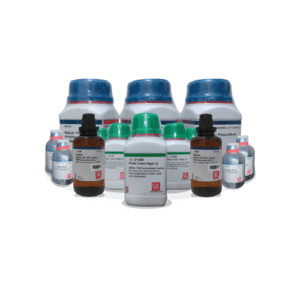
Description
Specifications Table
| Product Name | Triple Sugar Iron Agar (ISO Basis) (TSI Agar) | 12081 | SRL Chem |
|---|---|
| Quantity/Pack Size | 100 Gms, 500 Gms |
| Form | Powder |
| Grade | ISO Basis |
| Application | Microbiology, Bacterial Identification |
Product Description
Triple Sugar Iron Agar (ISO Basis) (TSI Agar) | 12081 | SRL Chem is a differential microbiological culture medium used for the identification and differentiation of enteric bacteria based on carbohydrate fermentation, gas production, and hydrogen sulfide formation. Formulated on an ISO basis, it supports standardized microbiological examination and laboratory identification procedures.
TSI Agar is commonly used in food microbiology, clinical microbiology, pharmaceutical quality control, water testing, environmental analysis, and academic research. It helps laboratories evaluate characteristic biochemical reactions of bacterial isolates as part of microbial identification workflows.
SRL Chem Triple Sugar Iron Agar provides consistent quality and dependable performance for bacterial identification, microbiological testing, and research applications.
FAQs
What is Triple Sugar Iron Agar used for?
TSI Agar is a differential medium used for the identification and differentiation of enteric bacteria based on carbohydrate fermentation, gas production, and hydrogen sulfide formation.
What does TSI Agar test for?
TSI Agar evaluates bacterial reactions involving glucose, lactose, and sucrose fermentation, along with gas production and hydrogen sulfide formation.
What does ISO Basis mean for TSI Agar?
ISO Basis indicates that the formulation is intended for microbiological procedures based on applicable ISO methodology and laboratory standards.
Which laboratories use TSI Agar?
It is commonly used in food microbiology, clinical microbiology, pharmaceutical quality control, water testing, environmental laboratories, and research facilities.
Can TSI Agar be used for bacterial identification?
Yes. It is commonly used as part of a broader biochemical identification workflow to help differentiate bacterial isolates based on their characteristic reactions.