Description
Specifications Table
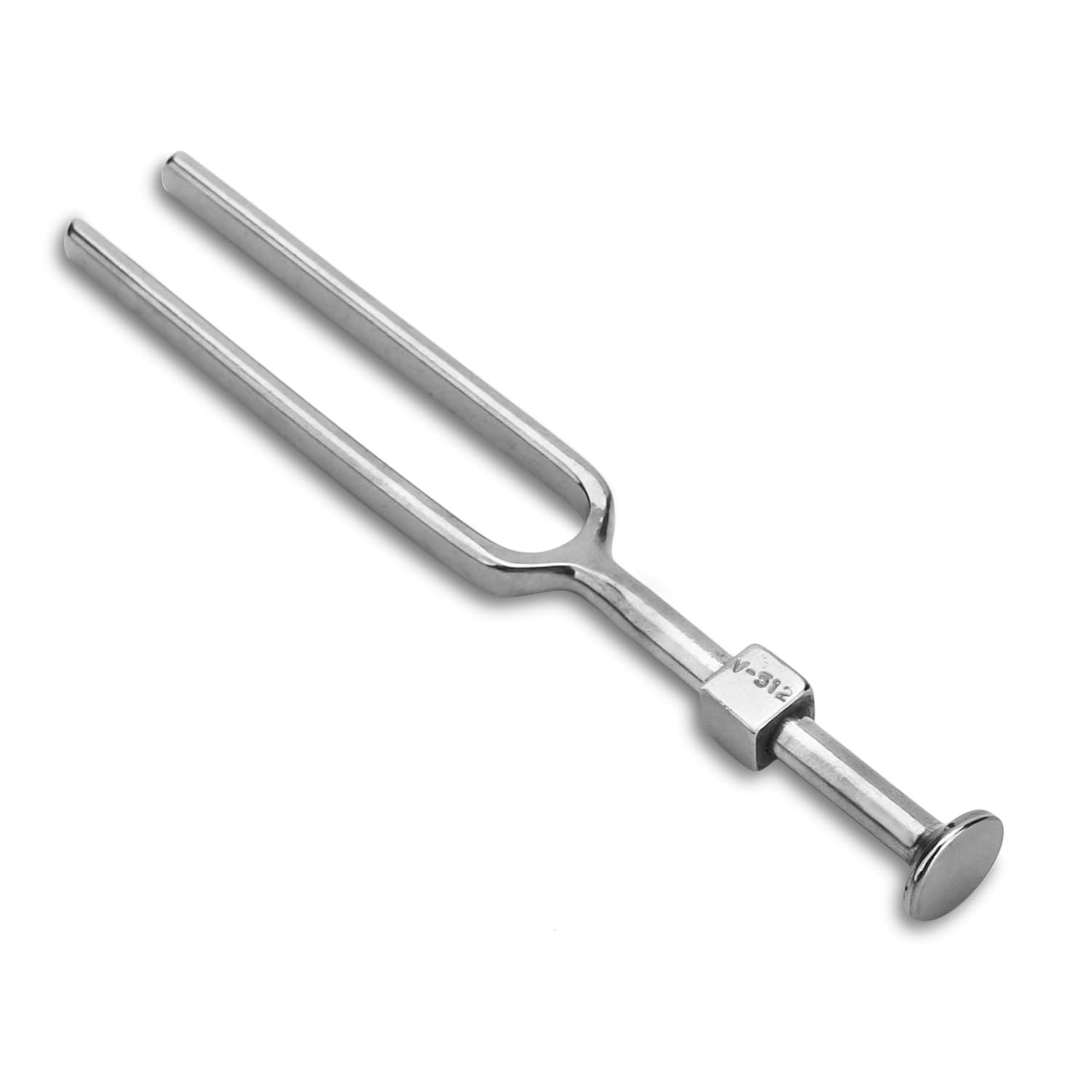
Product Name – Tuning Fork
Quantity/Pack Size – Single Piece
Form – Solid Metal
Grade – Laboratory Grade
Application – Sound experiments, vibration studies, physics demonstrations
Product Overview
The tuning fork is a classic laboratory instrument used to study sound, frequency, and vibration. It produces a pure musical tone when struck, making it an essential tool in physics education and acoustic research. With reliable construction and precise calibration, it is suitable for students, educators, and professionals in laboratories across India.
Academic Use
In schools and colleges, the tuning fork is a standard instrument for physics practicals. It helps students understand sound propagation, resonance, and frequency measurement, making abstract concepts more interactive and clear.
Industrial Use
Industries use tuning forks in specific calibration tasks, acoustic device testing, and mechanical resonance studies. Its accuracy and simplicity make it useful in training centers and technical workshops.
Institutional Use
Research institutes and universities rely on tuning forks for controlled acoustic experiments and demonstrations in vibration and resonance studies. It remains a dependable teaching and testing tool.
FAQs
What is the primary use of a tuning fork in labs?
It is mainly used for demonstrating sound waves, resonance, and vibration principles in physics experiments.
Is the tuning fork suitable for school-level experiments?
Yes, it is ideal for middle school, high school, and college-level physics practicals.
Can tuning forks be used for frequency calibration?
Yes, certain laboratory-grade tuning forks are designed for precise frequency calibration tasks in physics labs.
How should a tuning fork be handled for best results?
It should be gently struck against a rubber pad or block to produce clear resonance without damaging the metal.
What material is commonly used to make tuning forks?
They are usually made from high-quality steel or aluminum alloy for durability and accurate sound production.