
Description
Specifications Table
Product Material – High-grade ABS plastic and copper components
Grade – Educational/Research
Application – Verification of Thevenin’s, Norton’s, Superposition, and Maximum Power Transfer theorems
Product Overview
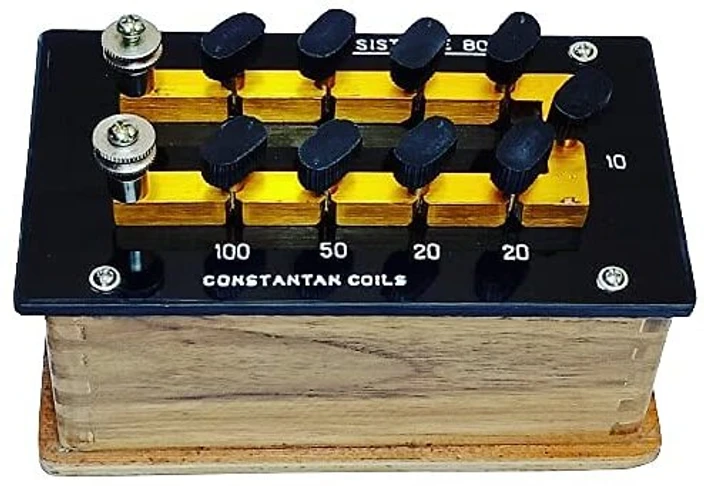
The Verification of Network Theorem (Four In One) kit is a meticulously designed educational tool for validating fundamental electrical network theorems with precision. Engineered for durability, this compact unit integrates high-grade ABS plastic housing with corrosion-resistant copper components, ensuring long-term reliability in lab environments. The kit features built-in resistors, potentiometers, and measurement terminals, allowing seamless verification of Thevenin’s, Norton’s, Superposition, and Maximum Power Transfer theorems without external dependencies. Its intuitive layout minimizes setup time, while color-coded terminals enhance usability for students and researchers. The circuit design adheres to standard electrical safety norms, with clear labeling for quick identification of components. Whether used for academic demonstrations or research validation, this kit delivers consistent performance with minimal calibration requirements. The enclosed instruction manual provides step-by-step guidance for each theorem, making it accessible even for beginners. Its lightweight yet robust construction ensures portability without compromising structural integrity, while the enclosed design protects against dust and accidental short circuits.
FAQs
1. What components are included in this network theorem verification kit?
The kit contains built-in resistors of varying values, adjustable potentiometers, DC power input terminals, measurement points, and connecting wires. All components are pre-assembled in a single unit for immediate use.
2. Can this kit be used to verify all four network theorems simultaneously?
While the kit supports verification of all four theorems, each theorem must be tested individually by reconfigure the internal connections as per the provided manual. The design allows quick switching between configurations.
3. What power supply specifications are required for operating this kit?
The kit operates on a standard DC power supply of 0-12V. Ensure the power source has current limiting capabilities to prevent damage to the internal components during experiments.
4. How should this kit be stored when not in use?
Store the kit in a dry, dust-free environment at room temperature. Avoid exposure to direct sunlight or moisture. The original packaging can be used for protection during storage.
5. Are there any safety precautions to follow while using this kit?
Always ensure proper grounding before powering the kit. Avoid touching live terminals during operation and never exceed the recommended voltage limits. Use insulated tools when making adjustments to prevent electrical shocks.