Description
Specifications Table
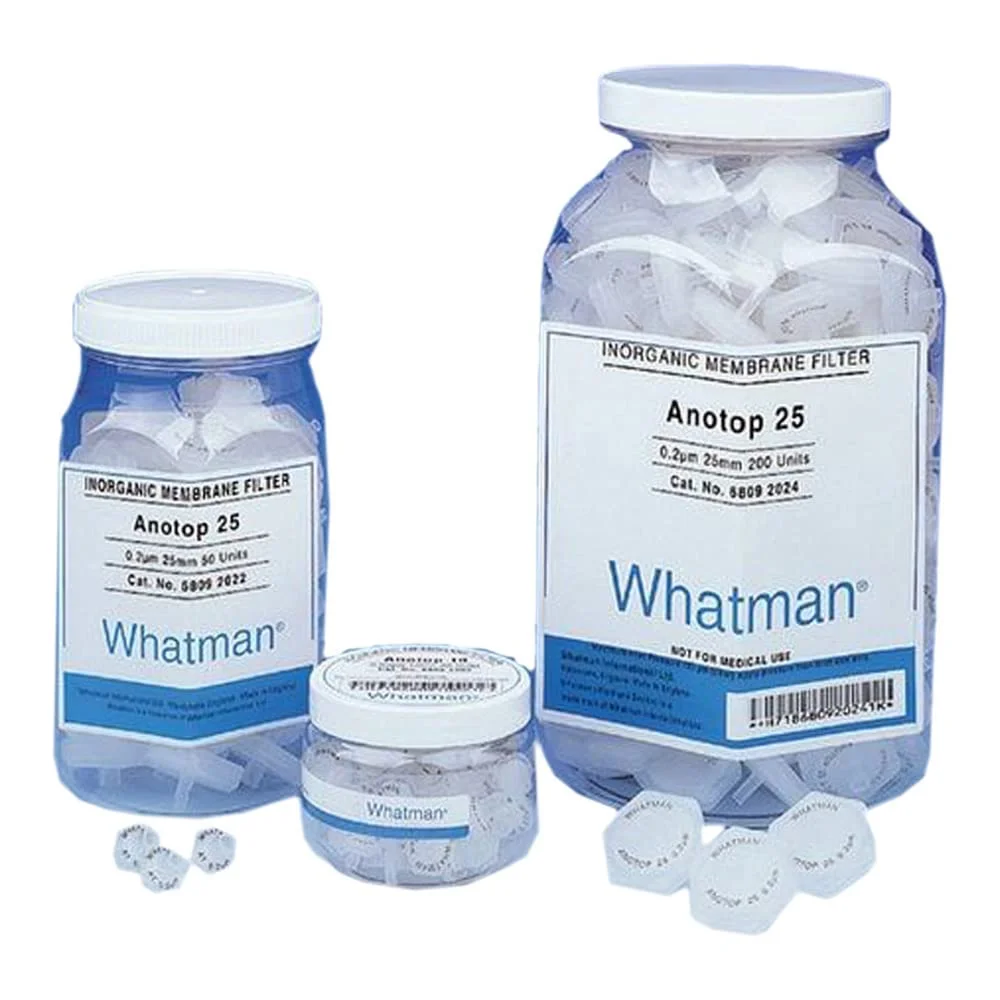
Product Name – Whatman Anotop Plus Syringe Filter
Quantity/Pack Size – 10mm,0.02S (Pack of 50), 10mm,0.02 (Pack of 50), 10mm,0.1S (Pack of 50), 10mm,0.1 (Pack of 50), 10mm,0.2S (Pack of 50), 10mm,0.2 (Pack of 50), 25mm,0.02S (Pack of 50), 25mm,0.02 (Pack of 50), 25mm,0.1S (Pack of 50), 25mm,0.1 (Pack of 50), 25mm,0.2S (Pack of 50), 25mm,0.2 (Pack of 50), 25mm,0.2 (Pack of 200)
Form – Syringe Filter
Grade – Analytical, Sterile (for sterile variants)
Application – HPLC, GC, solvent filtration, particle removal
Product Overview
The Whatman Anotop Plus Syringe Filter is engineered for ultra-pure sample preparation, combining a chemically inert PTFE membrane with a polypropylene housing to minimize extractables and ensure consistent filtration. Designed for critical applications, this filter excels in removing particulates as small as 0.02S, making it indispensable for HPLC, GC, and solvent-based workflows. The sterile variants undergo gamma irradiation, guaranteeing aseptic conditions for sensitive analyses. Its low-protein-binding properties and broad chemical compatibility (including acids, bases, and organic solvents) further enhance its versatility. The ergonomic design allows for single-handed operation, reducing contamination risks during sample transfer. Whether used for routine lab work or high-precision research, the Anotop Plus delivers reliable performance with minimal sample loss, ensuring accurate and reproducible results. The 10mm and 25mm diameters cater to varying sample volumes, while the sterile and non-sterile options provide flexibility for diverse protocols. Trusted by labs worldwide, this filter sets the benchmark for purity and efficiency in syringe filtration.
FAQs
1. What is the maximum pressure the Whatman Anotop Plus can withstand?
It is rated for pressures up to 7 bar (100 psi), but avoid exceeding this to prevent membrane damage or housing failure.
2. Can this filter be autoclaved for sterilization?
The non-sterile variants are not autoclavable; use the pre-sterilized (gamma-irradiated) versions for aseptic applications.
3. Is the PTFE membrane compatible with DMSO or THF?
Yes, the PTFE membrane resists most organic solvents, including DMSO, THF, and acetonitrile, without degradation.
4. How does the 0.02S pore size compare to 0.2?m for mycoplasma removal?
The 0.02?m pore size effectively retains mycoplasma and smaller particles, while 0.2S is suitable for general bacterial removal.
5. Are these filters certified for food or pharmaceutical testing?
While not specifically certified for food/pharma, they meet analytical-grade standards and are widely used in compliance-driven labs.