Description
Specifications Table
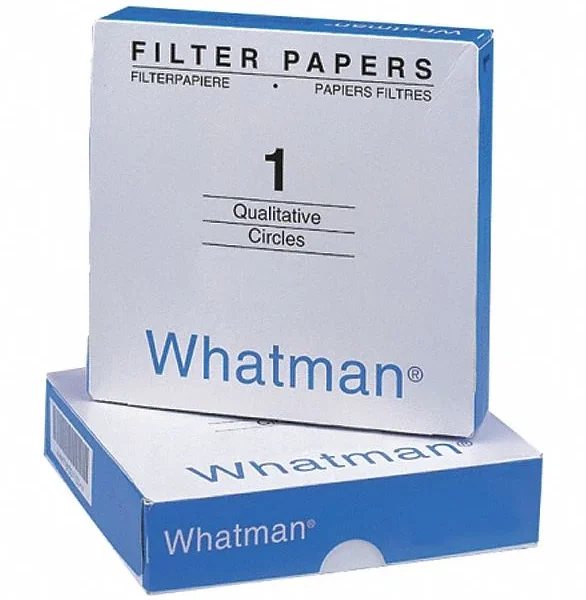
| Product Name | Whatman Grade 1 Cellulose Filter Paper |
|---|---|
| Quantity/Pack Size | Pack of 100 |
| Form | Circular sheets |
| Grade | Grade 1 (medium retention) |
| Application | General lab filtration, qualitative analysis |
Product Description
When precision matters in your lab work, the right filtration tool can make all the difference. Whatman Grade 1 cellulose filter paper is a trusted choice for researchers, students, and educators who need consistent, reliable results. Designed for general laboratory use, this filter paper balances retention and flow rate, making it versatile for a wide range of applications.
The 11cm diameter sheets fit standard filtration setups, while the medium retention (11µm) ensures efficient particle capture without sacrificing speed. Whether you’re clarifying solutions, separating precipitates, or conducting routine qualitative analysis, this filter paper delivers the performance you expect from a leading brand like Whatman.
Each pack contains 100 sheets, providing ample supply for repeated experiments or classroom demonstrations. The high-purity cellulose construction minimizes interference, so your results remain accurate and reproducible. For labs that demand quality without compromise, this filter paper is an essential addition to your supplies.
Upgrade your lab filtration today—buy Whatman Grade 1 filter paper online and experience the difference in clarity and efficiency.
Why This Filter Paper Stands Out
Not all filter papers are created equal. Whatman Grade 1 is engineered for consistency, with uniform porosity that ensures even flow across the entire sheet. This eliminates the frustration of uneven filtration that can skew your data. The cellulose material is chemically inert, so it won’t react with your samples or introduce contaminants.
Students will appreciate how easily it integrates into standard lab protocols, while researchers value its reliability in critical applications. Educators can confidently use it in demonstrations, knowing the results will be clear and repeatable. Whether you’re filtering aqueous or organic solutions, this grade offers the versatility to handle a broad spectrum of laboratory tasks.
Practical Applications in the Lab
This filter paper isn’t just for textbooks—it’s a workhorse in real-world lab settings. Common uses include:
Preparing samples for spectroscopy by removing particulate matter that could interfere with readings.
Separating precipitates in gravimetric analysis, where accuracy depends on complete retention of solids.
Clarifying culture media in microbiology labs to ensure sterile conditions for growth studies.
Teaching fundamental filtration techniques in educational labs, where consistency helps students focus on learning rather than troubleshooting.
For routine tasks or specialized applications, having a dependable filter paper like this on hand saves time and reduces the risk of errors.
Choosing the Right Filter Paper for Your Needs
With so many grades available, selecting the right filter paper can be overwhelming. Grade 1 is ideal when you need a balance between retention and flow rate. If your work involves fine particles, you might consider a higher-grade paper, but for most general lab tasks, this grade provides the perfect middle ground.
The 11cm size is a standard choice that fits common filtration funnels, but eqipped also offers other sizes if your setup requires something different. Always match the paper grade to your specific application—this ensures optimal performance and prevents clogging or incomplete filtration.
Storage and Handling Tips
To maintain the integrity of your filter paper, store it in a cool, dry place away from direct sunlight and chemical fumes. Handle sheets by the edges to avoid transferring oils or contaminants from your hands. If you’re working in a humid environment, consider using a desiccant to prevent moisture absorption, which can alter filtration characteristics.
When cutting sheets to fit smaller funnels, use clean scissors or a blade to avoid fraying the edges. For critical applications, it’s best to use full sheets to ensure consistent performance across the entire surface.
Safety Considerations
While cellulose filter paper is generally safe to handle, always follow standard lab safety protocols. Wear appropriate gloves when working with hazardous substances, and dispose of used filter paper according to your lab’s waste management guidelines. If filtering volatile or corrosive chemicals, ensure proper ventilation and use compatible equipment.
FAQs
What is the particle retention size for Whatman Grade 1 filter paper?
This grade retains particles larger than 11 micrometers, making it suitable for general filtration tasks where medium retention is sufficient.
Can I use this filter paper for both aqueous and organic solvents?
Yes, the cellulose material is compatible with a wide range of solvents, but always check chemical compatibility for specific applications.
How do I know which grade of filter paper to choose?
Grade 1 is ideal for routine lab work. For finer particles, consider higher grades, while coarser grades are better for faster flow rates with larger particles.
Is this filter paper sterile?
No, this product is not sterile. If sterility is required, you’ll need to autoclave it or use pre-sterilized filter paper.
Can I buy Whatman filter paper in bulk for my lab?
Yes, eqipped offers bulk purchasing options for labs with high-volume needs. Contact our team for customized quotes and packaging.