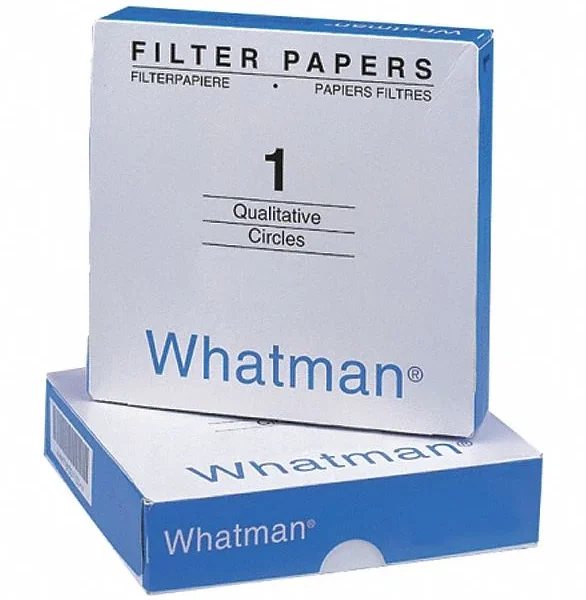

Description
Specifications Table
Product Name – Whatman ME26/31 STL Membrane Filter
Quantity/Pack Size – 50MM, 0.6µM (Pack of 400)
Form – Circular membrane discs
Grade – Mixed cellulose esters (MCE)
Application – Sterile filtration, particle analysis, air monitoring
Product Overview
The Whatman ME26/31 STL Membrane Filter is a high-performance filtration solution designed for laboratory applications requiring precision and reliability. Constructed from mixed cellulose esters (MCE), this filter combines mechanical strength with chemical compatibility, making it suitable for a wide range of filtration tasks. The 0.6µm pore size ensures efficient retention of microorganisms, fine particles, and contaminants while maintaining optimal flow rates. Its smooth surface minimizes particle entrapment, reducing the risk of clogging during extended use. The filter’s uniform porosity and consistent thickness provide reproducible results, critical for analytical and research applications. The sterile packaging preserves integrity until use, while the 50mm diameter fits standard filtration apparatus. Whether used in liquid or air filtration, this membrane delivers consistent performance, meeting the demands of quality-controlled environments. Its thermal stability and resistance to most organic solvents further enhance its versatility in diverse lab protocols.
FAQs
1. What is the shelf life of Whatman ME26/31 STL Membrane Filters?
When stored in original packaging under cool, dry conditions, these filters retain their performance for up to 5 years from the date of manufacture.
2. Can this filter be autoclaved for sterilization?
Yes, the Whatman ME26/31 STL membrane can be autoclaved at 121°C for 15 minutes without compromising its structural integrity or filtration efficiency.
3. Is this filter compatible with aggressive solvents like acetone or DMSO?
The mixed cellulose ester composition offers moderate resistance to organic solvents, but prolonged exposure to aggressive solvents may degrade the membrane. For solvent-heavy applications, consider PTFE-based alternatives.
4. How does the 0.6µm pore size compare to 0.45µm for bacterial retention?
A 0.6µm pore size retains most bacteria but may allow smaller species like *Mycoplasma* to pass. For absolute bacterial retention, a 0.22µm filter is recommended, though 0.6µm remains effective for general microbial filtration.
5. What’s the maximum differential pressure this filter can withstand?
The Whatman ME26/31 STL membrane supports differential pressures up to 4 bar (58 psi) in liquid filtration, though lower pressures are advised for prolonged use to prevent membrane distortion.