Description
Specifications Table
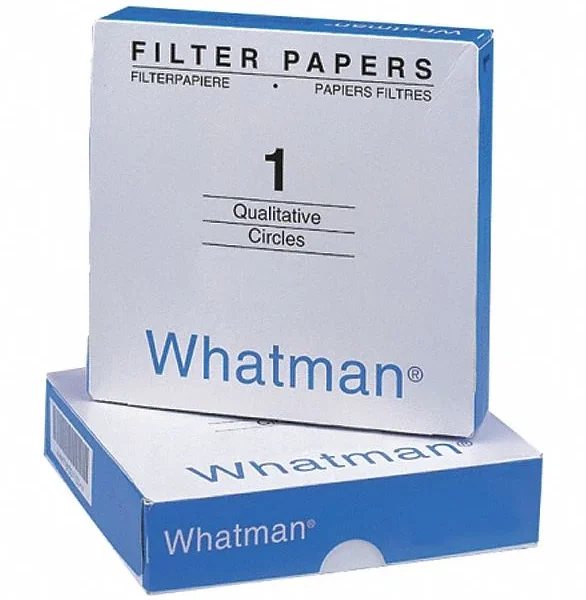
Product Name – Whatman NYL Membrane Filter
Quantity/Pack Size – 13MM,0.2uM (Pack of 100), 25MM,0.2uM (Pack of 100), 47MM,0.2uM (Pack of 100), 90MM,0.2uM (Pack of 50), 13MM,0.45uM (Pack of 100), 25MM,0.45uM (Pack of 100), 47MM,0.45uM (Pack of 100), 90MM,0.45uM (Pack of 50), 47MM,0.8uM (Pack of 100), 47MM,1.0uM (Pack of 100)
Form – Circular membrane discs
Grade – Laboratory-grade nylon
Application – Sterile filtration, protein binding, particle retention
Product Overview
The Whatman NYL Membrane Filter is engineered for precision filtration in demanding laboratory environments. Constructed from high-purity nylon, this membrane offers exceptional chemical resistance and mechanical strength, ensuring reliable performance across a wide range of applications. The uniform pore structure provides consistent particle retention, while the hydrophobic nature of nylon makes it particularly effective for aqueous and organic solvent filtration. Available in pore sizes ranging from 0.2?m to 1.0?m, these filters accommodate various filtration needs, from sterile processing to protein binding studies. The membrane’s inherent low extractables minimize sample contamination, while its thermal stability allows for autoclaving when sterilization is required. Each disc maintains dimensional stability even under high-pressure conditions, preventing deformation that could compromise filtration integrity. The white, opaque appearance facilitates easy visual inspection of filtered particles. This filter series combines Whatman’s decades of filtration expertise with advanced polymer technology to deliver a product that meets the stringent requirements of modern laboratories. The consistent performance across batches ensures reproducible results, making it a trusted choice for critical filtration processes.
FAQs
1. What is the chemical compatibility of Whatman NYL membrane filters?
These filters are compatible with most organic solvents, acids, and alkalis, though prolonged exposure to strong oxidizing agents should be avoided.
2. Can these filters be autoclaved for sterilization?
Yes, Whatman NYL membranes can be autoclaved at 121?C for 15-20 minutes without affecting their performance.
3. How do these compare to cellulose acetate filters?
Nylon membranes offer superior chemical resistance and protein binding capacity compared to cellulose acetate, making them better suited for organic solvent filtration.
4. What’s the recommended storage condition for these filters?
Store in a cool, dry environment in their original packaging to prevent contamination and maintain filter integrity.
5. Are these filters suitable for air ventilation systems?
While primarily designed for liquid filtration, the 0.2?m variants can be used for sterile air filtration in controlled environments.