Description
Specifications Table
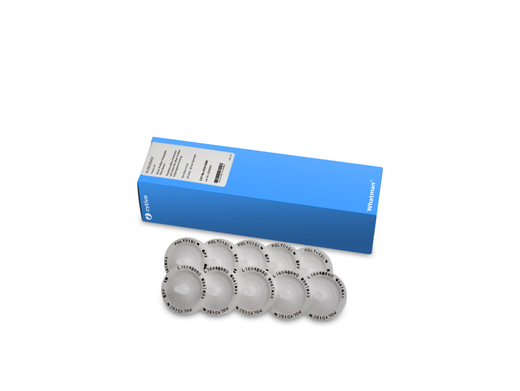
Product Name – Whatman Polydisc Filter
Quantity/Pack Size – 0.2uM, GF/PESS (Pack of 10) , 0.45uM, GF/PESS (Pack of 10) , 0.45uM, GF/PES (Pack of 50) , 0.1uM, PTFE (Pack of 10) , 0.2uM, PTFE (Pack of 10) , 0.45uM, PTFE (Pack of 10) , 1.0uM, PTFE (Pack of 10)
Form – Disc filters
Grade – GF/PESS, GF/PES, PTFE (hydrophobic)
Application – Sterile filtration, particle removal, sample prep
Product Overview
Whatman Polydisc filters are engineered for high-performance lab filtration, offering exceptional purity and consistency across critical applications. Available in pore sizes ranging from 0.1?m to 1.0?m, these filters cater to diverse needs?from sterile media preparation to particle removal in analytical workflows. The GF/PESS and GF/PES grades provide robust mechanical strength and chemical compatibility, ideal for aqueous and organic solvents, while PTFE variants deliver hydrophobic properties for air/gas filtration. Each disc is precision-manufactured to ensure uniform flow rates and minimal extractables, reducing sample contamination risks. The sterile, ready-to-use design eliminates pre-treatment steps, saving time in fast-paced labs. Whether used in syringe filtration, HPLC sample prep, or environmental testing, these filters maintain integrity under pressure, delivering reliable results. Their compatibility with standard filtration devices ensures seamless integration into existing protocols. Trusted by researchers globally, Whatman Polydisc filters combine durability with high retention efficiency, making them indispensable for demanding lab environments.
FAQs
1. What is the difference between GF/PESS and PTFE Whatman Polydisc filters?
GF/PESS filters are made of glass fiber with a polyethylene support, offering high flow rates and particle retention for aqueous solutions. PTFE filters are hydrophobic, designed for air/gas filtration or non-aqueous solvents, with superior chemical resistance.
2. Can these filters be autoclaved for sterilization?
PTFE filters can withstand autoclaving at 121?C, but GF/PESS and GF/PES variants are not recommended for autoclaving. Use pre-sterilized versions or ethylene oxide sterilization for these grades.
3. Are Whatman Polydisc filters compatible with organic solvents like acetone?
GF/PES and PTFE filters are compatible with most organic solvents, including acetone, methanol, and DMSO. GF/PESS filters may degrade with prolonged exposure to aggressive solvents.
4. How should unused filters be stored to maintain performance?
Store filters in their original packaging at room temperature (15?30?C), away from direct sunlight and moisture. Avoid exposure to extreme humidity or volatile chemicals to prevent premature degradation.
5. What alternatives exist if my required pore size isn?t listed?
For pore sizes outside the 0.1?m?1.0?m range, consider Whatman?s syringe filters or membrane discs in 0.02?m or 5.0?m variants. Contact support for custom filtration solutions.