Description
Specifications Table
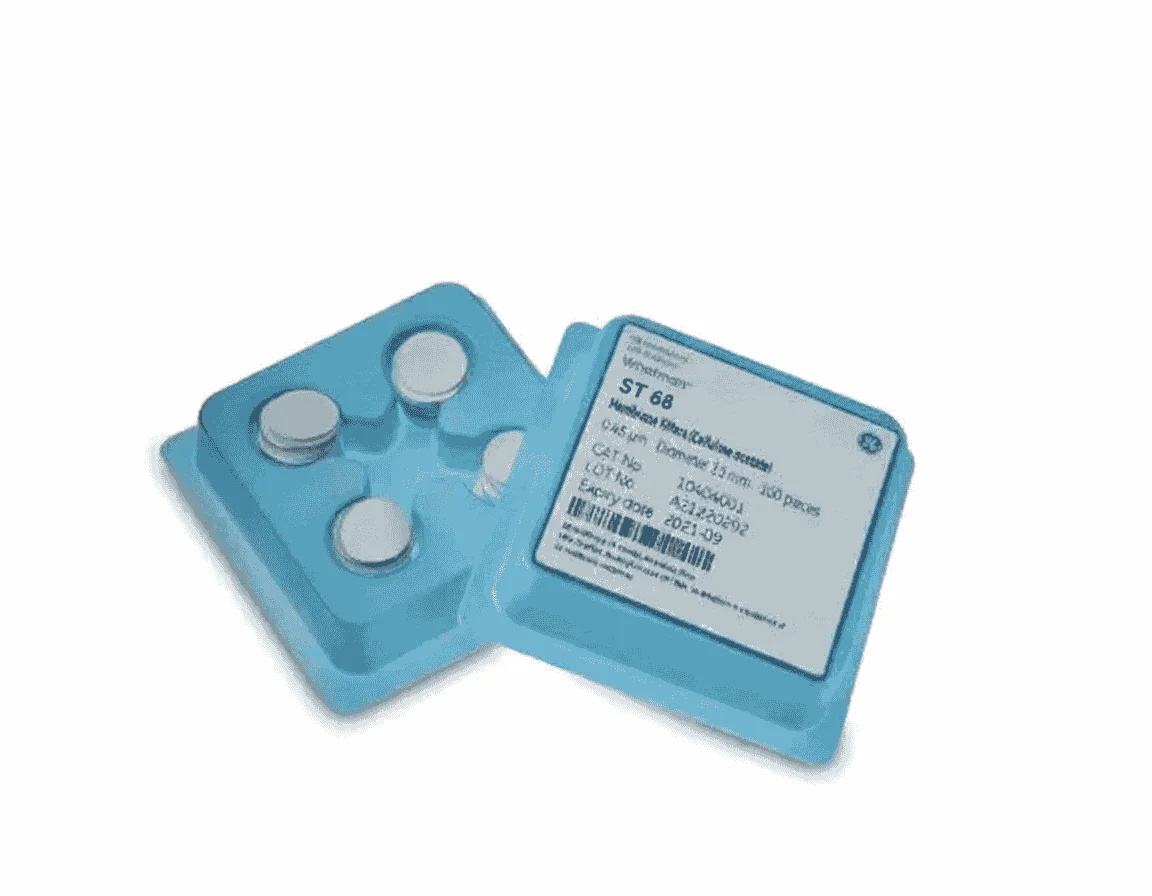
Product Name – Whatman ST69 Membrane Filter
Quantity/Pack Size – Pack of 100
Diameter – 47MM
Pore Size – 1.2µM
Material – Cellulose Acetate
Grade – High-Purity
Application – Lab Filtration, Particle Retention
Product Overview
The Whatman ST69 Membrane Filter is engineered for high-performance filtration in laboratory settings, offering exceptional clarity and particle retention. Made from premium cellulose acetate, this filter ensures consistent results with its uniform 1.2µm pore size, making it ideal for applications requiring precise separation. The 47MM diameter provides a standard fit for most filtration systems, while the high-purity grade guarantees minimal extractables and reliable performance. Its robust construction resists chemical degradation, ensuring longevity even under demanding conditions. Whether used in routine sample preparation or critical research, the Whatman ST69 delivers accuracy and efficiency, reducing the risk of contamination and ensuring reproducible outcomes. The pack of 100 filters offers convenience for high-throughput workflows, minimizing downtime and maximizing productivity. Designed for ease of use, these filters integrate seamlessly into standard filtration setups, providing a hassle-free experience for lab professionals.
FAQs
1. What is the material composition of the Whatman ST69 Membrane Filter?
The Whatman ST69 Membrane Filter is composed of cellulose acetate, which provides a balance of chemical resistance and high flow rates.
2. Can this filter be used with aqueous and organic solvents?
Yes, the cellulose acetate material is compatible with a wide range of aqueous solutions and some organic solvents, though compatibility should be verified for specific applications.
3. What is the typical shelf life of these filters when stored properly?
When stored in a cool, dry environment away from direct sunlight, these filters can maintain their performance for up to 2-3 years from the date of manufacture.
4. Are there alternative filters with similar pore sizes but different materials?
Alternatives like nylon or PVDF membrane filters offer similar pore sizes but differ in chemical compatibility and protein-binding properties.
5. How should these filters be disposed of after use?
Used filters should be disposed of according to standard laboratory waste protocols, considering any hazardous materials they may have been exposed to.