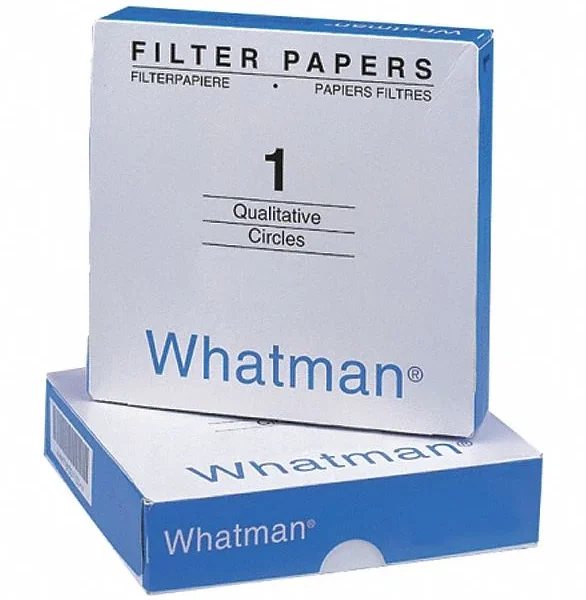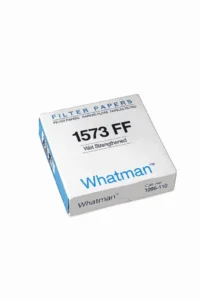
Description
Specifications Table
| Product Name | Whatman Grade 1573 FF Cellulose Filter Paper |
|---|---|
| Pack Size | 125MM (Pack of 100), 150MM (Pack of 100), 185MM (Pack of 100), 240MM (Pack of 100), 270MM (Pack of 100), 320MM (Pack of 100) |
| Form | Flat circles |
| Grade | 1573 FF (Fast Flow) |
| Application | General lab filtration, particle retention, sample preparation |
Product Description
When precision matters in your lab work, the right filtration tool can make all the difference. The Whatman Grade 1573 FF Cellulose Filter Paper is engineered for researchers, students, and educators who need reliable, high-performance filtration without compromising on quality. Whether you’re filtering solutions in a university lab or conducting critical research, this filter paper delivers consistent results every time.
Known for its fast flow rate and low ash content, Grade 1573 FF is a go-to choice for general laboratory filtration. The cellulose composition ensures minimal interference with your samples, making it ideal for qualitative analysis and routine filtration tasks. Its smooth surface allows for even particle distribution, reducing clogging and ensuring efficient processing.
At eqipped, we understand the demands of modern labs. That’s why we offer this premium filter paper in multiple pack sizes to suit your workflow. From smaller 125mm circles for bench-scale experiments to larger 320mm sheets for high-volume applications, you’ll find the perfect fit for your needs. Each pack contains 100 sheets, providing ample supply for ongoing projects.
Upgrade your lab’s filtration process with Whatman’s trusted quality—order your Grade 1573 FF filter paper today and experience the difference.
FAQs
What is the particle retention size for Whatman Grade 1573 FF?
This grade typically retains particles around 4-7 micrometers, making it suitable for general filtration tasks where medium retention is required.
Can this filter paper be used for quantitative analysis?
While primarily designed for qualitative work, its low ash content makes it acceptable for some quantitative applications where minimal residue is critical.
Is this filter paper pre-sterilized?
No, Whatman Grade 1573 FF is not pre-sterilized. For sterile applications, you can autoclave it before use or explore sterile cellulose filter paper options.
What’s the difference between Grade 1573 and other Whatman grades?
Grade 1573 FF is optimized for fast flow rates, while other grades like 42 or 542 may offer finer retention or different ash characteristics depending on the application.
How do I buy Whatman filter paper grade 1573 in bulk?
eqipped offers wholesale pricing on bulk orders. Contact our sales team to discuss your requirements and get the best rates for your lab or institution.