Description
Specifications Table
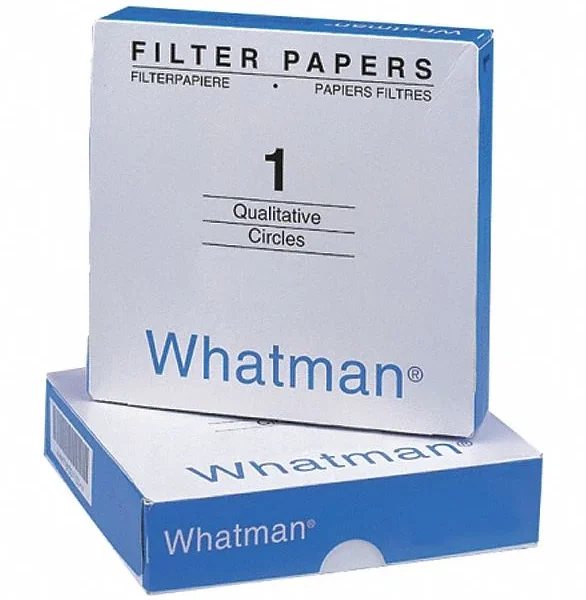
| Product Name | Whatman Grade 1 Cellulose Filter Paper |
|---|---|
| Quantity/Pack Size | Pack of 100 |
| Form | Circular sheets |
| Grade | Grade 1 |
| Application | General laboratory filtration, qualitative analysis |
Product Description
When precision matters in your lab work, the right filtration tools make all the difference. The Whatman Grade 1 cellulose filter paper is a trusted choice for researchers, students, and educators who need reliable results every time. Designed for general laboratory use, this 32cm filter paper offers a balanced combination of retention and flow rate, making it ideal for a wide range of applications.
What sets Grade 1 apart is its versatility. Whether you’re filtering precipitates in qualitative analysis or clarifying solutions, these sheets provide consistent performance. The medium retention rate (11 micrometers) ensures effective particle capture without sacrificing filtration speed. This makes it perfect for routine lab tasks where efficiency and accuracy are equally important.
Each pack contains 100 sheets, giving you ample supply for multiple experiments or classroom demonstrations. The cellulose composition ensures chemical compatibility with most common solvents and solutions, while the uniform thickness guarantees even filtration across the entire surface.
For labs that prioritize quality without compromise, Whatman remains the gold standard in filtration. These filter papers are manufactured under strict quality controls to meet the demands of modern research and education. When you buy Whatman filter paper online from eqipped, you’re getting genuine products with the assurance of authenticity and performance.
Upgrade your lab’s filtration setup today with Grade 1 filter paper that professionals trust.
Why This Filter Paper Stands Out
The Grade 1 designation isn’t arbitrary—it represents a carefully engineered balance of properties that make this filter paper exceptionally useful in educational and research settings. The 32cm diameter provides ample surface area for larger volume filtrations, while the medium porosity handles most common laboratory particles effectively.
Students will appreciate how these sheets maintain integrity even with repeated use in classroom experiments. The consistent pore size distribution means you won’t get unexpected variations in filtration results between sheets. This reliability is particularly valuable when teaching fundamental filtration techniques or conducting comparative studies.
Researchers working on qualitative analysis will find the retention characteristics ideal for capturing fine precipitates while allowing clear filtrates to pass through. The natural cellulose fibers don’t introduce contaminants that could interfere with your results, making these sheets suitable for sensitive applications.
Practical Applications in Your Lab
This isn’t just another lab supply—it’s a workhorse that handles diverse filtration needs. In academic labs, you’ll find it perfect for standard chemistry experiments like separating mixtures or purifying compounds. The 32cm size works well with most laboratory funnels, making setup quick and easy.
For environmental testing, these sheets effectively filter water samples for particulate analysis. In biological labs, they’re excellent for clarifying culture media or removing cellular debris. The versatility extends to food science applications where you might need to filter suspensions or separate components.
Educators will find these particularly useful for demonstrating filtration principles. The visible particle retention on the white cellulose surface makes it easy for students to observe the process in action. The consistent performance means every student gets comparable results during group experiments.
Making the Most of Your Filter Paper
To maximize the lifespan of each sheet, consider these practical tips. Always handle the papers by the edges to avoid contaminating the filtration surface. For best results, pre-wet the paper with a small amount of your solvent before beginning filtration—this helps achieve more uniform flow.
When working with particularly fine particles, you might want to use multiple layers to improve retention without sacrificing flow rate. The 32cm size gives you flexibility to fold or cut sheets as needed for different funnel sizes while maintaining adequate filtration area.
Storage matters too. Keep your filter papers in their original packaging when not in use to protect them from dust and moisture. The pack of 100 provides enough quantity for most lab courses or research projects, reducing the need for frequent reordering.
FAQs
What’s the particle retention size for Whatman Grade 1 filter paper?
Grade 1 filter paper has a nominal particle retention of 11 micrometers, making it suitable for most general laboratory filtration needs where medium retention is required.
Can I use this filter paper with organic solvents?
Yes, these cellulose filter papers are compatible with most common organic solvents used in laboratories, though we recommend checking specific chemical compatibility for your particular application.
How does Grade 1 differ from other Whatman grades?
Grade 1 offers a balanced combination of retention and flow rate (11µm), while higher grades provide finer retention and slower flow, and lower grades offer faster flow with less retention.
Is this filter paper suitable for quantitative analysis?
While primarily designed for qualitative work, Grade 1 can be used for some quantitative applications where high precision isn’t critical. For quantitative analysis, consider Whatman’s ashless grades.
What’s the best way to store unused filter papers?
Store in the original packaging in a cool, dry place away from direct sunlight and chemical fumes to maintain performance and prevent contamination.