Description
Specifications Table
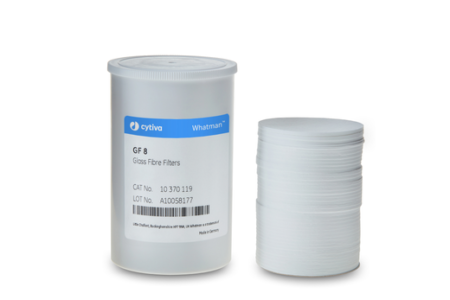
| Product Name | Whatman Grade GF8 Glass Microfibre Filter | 10370119 |
|---|---|
| Pack Size | 47MM (Pack of 200), 90MM (Pack of 100), 200MM (Pack of 100), 60x90MM (Pack of 100) |
| Form | Circular discs |
| Grade | GF8 (High-efficiency) |
| Application | Air monitoring, liquid filtration, gravimetric analysis |
Product Description
When precision matters in your lab, the Whatman Grade GF8 glass microfibre filter delivers unmatched performance. Designed for researchers and students who demand accuracy, this filter combines high particle retention with fast flow rates, making it a staple in analytical and environmental labs across India.
Crafted from 100% borosilicate glass, the GF8 filter ensures chemical resistance and thermal stability, even under harsh conditions. Its 0.7µm retention rating captures fine particulates without clogging, saving you time and resources. Whether you’re filtering corrosive liquids, analyzing airborne contaminants, or performing gravimetric tests, this filter provides consistent, reliable results.
At eqipped, we understand the challenges of sourcing quality lab supplies in India. That’s why we stock authentic Whatman filters, trusted by universities, research institutes, and testing labs nationwide. Need bulk quantities for your lab? Order now and get fast shipping with secure packaging.
The GF8’s smooth surface and uniform thickness minimize background interference, critical for sensitive applications like HPLC sample prep or environmental monitoring. Unlike cellulose filters, glass microfibre won’t degrade in organic solvents, giving you versatility across protocols.
For students working on thesis projects or educators setting up practical sessions, this filter offers an affordable yet professional-grade solution. Its compatibility with standard filtration apparatus means no extra equipment costs. Upgrade your lab’s filtration today – buy Whatman GF8 online at eqipped.
FAQs
What is the particle retention size of GF8 filters?
The Whatman GF8 filter retains particles down to 0.7 micrometers, making it suitable for fine particulate analysis.
Can I use GF8 filters with organic solvents?
Yes, these glass microfibre filters are chemically resistant to most organic solvents, unlike cellulose-based filters.
How does GF8 compare to GF/A filters?
GF8 offers higher flow rates than GF/A while maintaining similar retention, making it better for high-volume filtration.
What’s the typical delivery time for eqipped orders?
Most orders ship within 24-48 hours, with delivery across India in 3-5 business days.
Are these filters suitable for environmental monitoring?
Absolutely. GF8 filters are widely used in air quality testing and meet EPA standards for particulate collection.