Description
Specifications Table
| Product Name | Whatman OE66 Membrane Filter |
|---|---|
| Pack Size | 25MM,0.2uM (Pack of 100) | 47MM,0.2uM (Pack of 100) | 50MM,0.2uM (Pack of 100) | 142MM,0.2uM (Pack of 25) | 300x600MM,0.2uM (Pack of 5) | 110MM,0.2uM (Pack of 50) | 293MM,0.2uM (Pack of 25) |
| Form | Membrane Filter |
| Grade | Laboratory Grade |
| Application | Sterile Filtration, Microbiology, Particle Analysis |
Product Description
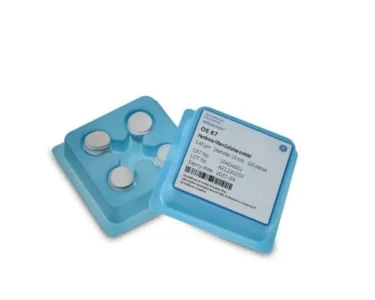
When precision matters in your lab, the Whatman OE66 membrane filter delivers unmatched performance. Designed for researchers, students, and educators, this 0.2µm filter ensures reliable sterile filtration with minimal extractables. Whether you’re working in microbiology, environmental testing, or particle analysis, the OE66 membrane filter provides consistent results every time.
What sets the Whatman OE66 apart is its high flow rate, reducing filtration time without compromising accuracy. The mixed cellulose ester membrane is compatible with a wide range of solvents, making it versatile for various lab applications. At eqipped, we understand the importance of quality lab supplies, which is why we stock genuine Whatman filters to support your research needs.
Upgrade your lab filtration today with Whatman OE66 membrane filters. Order online for fast delivery across India.
FAQs
What is the shelf life of Whatman OE66 membrane filters?
When stored properly in their original packaging, these filters maintain their performance for up to 5 years from the manufacturing date.
Can I autoclave these filters?
Yes, Whatman OE66 filters can be autoclaved at 121°C for 15 minutes without affecting their filtration properties.
Are these filters compatible with organic solvents?
The mixed cellulose ester membrane is compatible with most common organic solvents, but always check compatibility for specific applications.
What’s the difference between OE66 and other Whatman membrane filters?
The OE66 offers a balance of flow rate and particle retention, making it ideal for general lab use, while other grades may specialize in specific applications.
How do I know which pore size to choose?
For most bacterial retention applications, 0.2µm is standard. For larger particles or pre-filtration, consider 0.45µm filters.