Description
Specifications Table
| Product Name | Whatman CA Membrane Filter | 7001-0004 |
|---|---|
| Pack Size | 25MM, 0.45um (Pack of 100) | 47MM, 0.2um (Pack of 100) | 47MM, 0.45um (Pack of 100) |
| Form | Membrane Filter |
| Grade | Laboratory Grade |
| Application | Sterile Filtration, Particle Analysis, Microbiological Testing |
Product Description
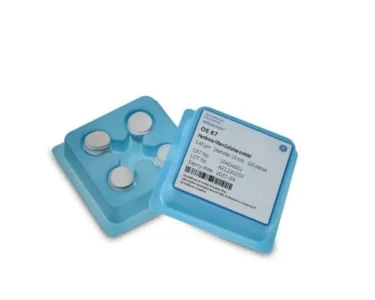
When precision matters in your lab work, the Whatman CA Membrane Filter (7001-0004) delivers reliable performance. Made from high-purity cellulose acetate, these filters are designed for critical applications like sterile filtration, particle analysis, and microbiological testing. The uniform pore structure ensures consistent results, whether you’re working in a research lab, educational institution, or industrial setting.
Available in 25mm and 47mm diameters with pore sizes of 0.2µm and 0.45µm, these filters are compatible with standard filtration setups. The cellulose acetate material offers low protein binding, making it ideal for biological samples. Each pack contains 100 filters, providing ample supply for routine laboratory use.
At eqipped, we understand the importance of quality lab supplies. That’s why we source Whatman filters directly from trusted manufacturers, ensuring authenticity and performance. Whether you’re a student setting up an experiment or a researcher conducting sensitive analyses, these filters provide the clarity and reliability you need.
Need a dependable filter for your next experiment? Buy Whatman CA Membrane Filter online today and experience hassle-free filtration.
Why This Filter Stands Out
The Whatman CA Membrane Filter is a favorite among lab professionals for several reasons. Its cellulose acetate composition resists chemical degradation, making it suitable for a wide range of solvents and aqueous solutions. The precise pore sizes allow for efficient particle retention while maintaining good flow rates, reducing filtration time.
Unlike some synthetic membranes, cellulose acetate filters are naturally hydrophilic, eliminating the need for pre-wetting. This feature saves time and reduces the risk of contamination. Additionally, the white, opaque surface makes it easy to observe particulate matter, aiding in visual analysis.
For educators, these filters are an excellent teaching tool. Their consistent performance helps students understand filtration principles without variability interfering with results. Researchers appreciate the reproducibility, which is crucial for publishing reliable data.
Applications in the Lab
This versatile filter finds use in numerous laboratory applications:
In microbiology labs, the 0.45µm version is commonly used for bacterial retention and colony counting. The 0.2µm variant is preferred for sterilizing solutions and removing mycoplasmas. Environmental scientists rely on these filters for water quality testing, capturing particles and microorganisms for analysis.
Pharmaceutical laboratories use them for sterile filtration of buffers and media. In food and beverage testing, they help detect contaminants and spoilage organisms. The filters are also valuable in air quality monitoring, where they trap airborne particles for microscopic examination.
Choosing the Right Pore Size
Selecting between 0.2µm and 0.45µm depends on your specific needs. The 0.2µm filters are ideal when absolute sterility is required, such as in cell culture media preparation or pharmaceutical sterilization. They effectively remove most bacteria and larger viruses.
The 0.45µm filters are better suited for general particle filtration and microbial enumeration. They allow faster flow rates while still capturing bacteria and yeast. Many standard protocols, like membrane filtration for water testing, specify 0.45µm filters.
Consider your sample volume and desired throughput when choosing the diameter. The 47mm filters handle larger volumes and are standard in many filtration systems, while the 25mm version is perfect for small-scale experiments or when working with limited sample quantities.
Proper Handling and Storage
To maintain filter integrity, store them in their original packaging at room temperature. Avoid exposure to direct sunlight or extreme humidity. When handling, use clean forceps to prevent contamination. Always wear appropriate gloves, especially when working with biological samples.
Before use, inspect each filter for damage or irregularities. If using for sterile applications, sterilize the filter assembly according to your lab’s protocol. After filtration, dispose of used filters properly, following your institution’s biohazard waste guidelines.
Compatibility with Filtration Systems
These Whatman filters fit most standard filtration apparatus. The 47mm diameter works with common vacuum filtration setups and syringe filter holders. The 25mm size is ideal for small-volume applications and fits many disposable filter units.
For best results, use with a support pad to prevent tearing under vacuum pressure. The filters can be used with both glass and plastic filtration funnels. When autoclaving is required, follow the manufacturer’s guidelines to prevent membrane damage.
Cost-Effective Lab Solution
Purchasing in packs of 100 offers excellent value for laboratories with regular filtration needs. The consistent quality reduces experiment failures, saving both time and resources. Many labs find that buying in bulk from eqipped provides better pricing than purchasing individual filters.
Stock up on Whatman CA Membrane Filters today and ensure your lab is always ready for precise filtration tasks.
FAQs
What is the difference between cellulose acetate and cellulose nitrate membrane filters?
Cellulose acetate filters, like this Whatman CA Membrane, are more chemically resistant and have lower protein binding than cellulose nitrate. They’re better for biological samples and organic solvents. Cellulose nitrate filters offer higher flow rates but may degrade with certain chemicals.
Can these filters be autoclaved?
Yes, Whatman CA Membrane Filters can be autoclaved at 121°C for 15 minutes. However, avoid prolonged autoclaving as it may affect pore size integrity. Always check the manufacturer’s specific autoclaving guidelines for your application.
How should I dispose of used membrane filters?
Dispose of used filters according to your lab’s biohazard waste protocols. If filtering biological samples, treat them as potentially infectious material. For non-hazardous applications, they can be disposed of as regular lab waste, but always follow local regulations.
What’s the shelf life of these filters?
When stored properly in their original packaging at room temperature, Whatman CA Membrane Filters typically have a shelf life of 3-5 years. Always check the expiration date on the package before use.
Are these filters suitable for protein solutions?
Yes, cellulose acetate has low protein binding properties, making these filters suitable for most protein solutions. However, for very sensitive protein work, you might consider specialized low-protein-binding filters for optimal recovery.