Description
Specifications Table
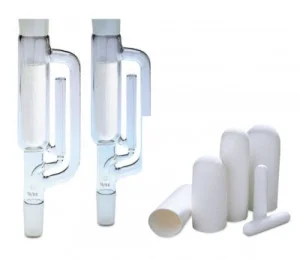
Product Name – Whatman Extraction Thimbles ST
Quantity/Pack Size – 10x50MM (Pack of 25), 18x55MM (Pack of 25), 19x90MM (Pack of 25), 22x65MM (Pack of 25), 22x80MM (Pack of 25), 25x80MM (Pack of 25), 25x90MM (Pack of 25), 25x100MM (Pack of 25), 26x60MM (Pack of 25), 26x100MM (Pack of 25), 28x80MM (Pack of 25), 28x100MM (Pack of 25), 28x120MM (Pack of 25), 30x80MM (Pack of 25), 30x100MM (Pack of 25), 33x80MM (Pack of 25), 33x94MM (Pack of 25), 33x100MM (Pack of 25), 33x118MM (Pack of 25), 37x130MM (Pack of 25), 41x123MM (Pack of 25), 43x123MM (Pack of 25), 60x180MM (Pack of 25)
Form – Cylindrical thimbles
Grade – Standard Thickness (ST)
Application – Soxhlet extraction, solid-liquid extraction, environmental analysis, food testing, and general lab filtration
Product Overview
Whatman Extraction Thimbles ST are precision-engineered for demanding solid-liquid extraction applications, offering exceptional chemical resistance and mechanical strength. Constructed from high-purity cellulose fibers, these thimbles ensure minimal extractables and consistent flow rates, making them indispensable for Soxhlet extractions and other critical filtration processes. The standard thickness (ST) grade provides an optimal balance between retention efficiency and flow rate, accommodating a wide range of sample types without clogging or particle breakthrough. Their cylindrical design with reinforced seams prevents deformation during prolonged solvent exposure, while the lint-free construction eliminates sample contamination risks. Compatible with most organic solvents, acids, and bases, these thimbles maintain structural integrity across temperature variations, ensuring reproducible results in environmental testing, food analysis, and pharmaceutical applications. The uniform wall thickness and smooth internal surface minimize sample loss while maximizing extraction efficiency. Each pack contains 25 individually wrapped thimbles to preserve sterility and prevent cross-contamination between uses. The comprehensive size range (from 10x50mm to 60x180mm) allows precise matching to different extraction apparatus and sample volumes, eliminating the need for trimming or modification. These thimbles meet stringent quality standards for ash content (<0.06%) and heavy metal impurities, guaranteeing interference-free analytical results. Their neutral pH and absence of binders or additives make them suitable for sensitive applications where chemical purity is paramount.
FAQs
1. What materials are Whatman ST extraction thimbles made from and why does this matter?
These thimbles are constructed from 100% pure cellulose fibers without any binders or additives. This composition is critical because it ensures minimal extractables that could interfere with your analysis, provides consistent flow rates, and maintains chemical resistance across a wide pH range. The absence of synthetic materials also means they incinerate completely during ashing procedures.
2. How do I select the correct thimble size for my Soxhlet apparatus?
The ideal thimble size should leave about 5-10mm clearance on all sides when placed in your Soxhlet extractor. Measure your apparatus’s internal diameter and height, then choose a thimble that’s slightly smaller. For example, a 25x90mm thimble typically fits standard 50ml Soxhlet extractors. Larger 33x100mm or 43x123mm sizes are better suited for 100ml or 250ml extractors respectively.
3. Can these thimbles be reused, and if so, how should they be cleaned?
While technically possible to reuse, it’s generally not recommended for critical applications due to potential cross-contamination. If reuse is necessary for non-sensitive work, rinse with the same solvent used in your extraction, then dry at 105?C for 1 hour. For complete decontamination between different samples, incinerate and use a new thimble. The cellulose material can withstand multiple solvent rinses but may become brittle after repeated drying cycles.
4. What’s the difference between ST and other Whatman thimble grades?
The ST grade represents standard thickness, offering a balance between flow rate and particle retention. Thicker grades like QT (quartz thimbles) provide higher temperature resistance but slower flow, while thinner grades may offer faster filtration but less mechanical strength. ST thimbles are the most versatile for general Soxhlet extractions where extreme temperatures aren’t required.
5. How should these thimbles be stored to maintain their performance?
Store the thimbles in their original packaging at room temperature (15-30?C) in a dry environment with relative humidity below 60%. Keep them away from direct sunlight and volatile chemicals. The individual wrapping helps maintain cleanliness – only remove thimbles as needed. For long-term storage, consider placing the package in a sealed container with silica gel packets to prevent moisture absorption that could affect filtration properties.