Description
Specifications Table
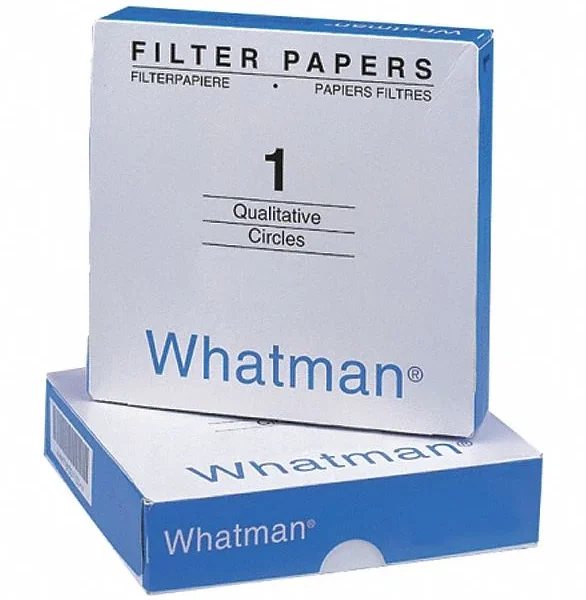
| Product Name | Whatman Grade 1 Cellulose Filter Paper Sheet |
|---|---|
| Quantity/Pack Size | Pack of 100 |
| Form | Sheet |
| Grade | Grade 1 |
| Application | General laboratory filtration, qualitative analysis |
Product Description
When it comes to reliable filtration in the lab, Whatman Grade 1 cellulose filter paper sheets are a trusted choice for students, researchers, and educators alike. These high-quality sheets, measuring 60×60 cm, are designed for general-purpose filtration, offering a balanced combination of particle retention and flow rate. Whether you’re working on qualitative analysis, sample preparation, or routine lab experiments, this filter paper ensures consistent performance every time.
The Grade 1 designation means these sheets are optimized for medium retention, making them suitable for a wide range of applications. The cellulose composition provides excellent chemical compatibility, allowing you to filter aqueous and organic solutions without worrying about degradation. Each pack contains 100 sheets, giving you ample supply for multiple experiments or classroom demonstrations.
One of the standout features of Whatman filter paper is its uniformity. The consistent porosity across the sheet ensures even filtration, reducing the risk of clogging or uneven flow. This reliability is why Whatman has been a staple in laboratories for decades. Whether you’re filtering precipitates, clarifying liquids, or preparing samples for further analysis, these sheets deliver the precision you need.
For those who need filter paper in bulk, this pack of 100 sheets offers great value without compromising on quality. It’s an ideal choice for educational institutions, research labs, and even home-based experiments where consistent results matter. The large sheet size allows for flexibility—you can cut them to fit different funnels or use them as-is for larger-scale filtration.
Upgrade your lab filtration with Whatman Grade 1 filter paper sheets. Buy online today and experience the difference in quality and performance.
At eqipped, we understand the importance of having the right tools for your experiments. That’s why we stock only genuine Whatman products, ensuring you get the same reliability that professionals trust. Whether you’re a student setting up your first lab or a seasoned researcher, this filter paper will meet your needs with ease.
The versatility of these sheets extends beyond traditional lab use. They’re also commonly used in environmental testing, food and beverage analysis, and even in some industrial applications. The medium retention rate makes them suitable for filtering out fine particles while still allowing a steady flow, which is crucial for efficient workflows.
If you’re looking to buy filter paper online, this pack offers the perfect balance of quantity and quality. No more last-minute runs to the store or compromising on subpar alternatives. With eqipped, you can order from the comfort of your lab or home and have your supplies delivered promptly.
Don’t settle for less when it comes to your lab essentials. Shop Whatman Grade 1 filter paper sheets now and ensure accurate, reliable filtration every time.
FAQs
What is the particle retention size for Whatman Grade 1 filter paper?
Whatman Grade 1 filter paper has a particle retention size of approximately 11 micrometers, making it suitable for general laboratory filtration tasks.
Can these filter paper sheets be used with organic solvents?
Yes, these cellulose filter papers are compatible with most organic solvents, but it’s always best to check chemical compatibility for specific applications.
How should I store unused filter paper sheets?
Store the sheets in a cool, dry place away from direct sunlight and moisture to maintain their integrity and performance.
Are these sheets pre-cut or do I need to cut them myself?
The sheets come in a 60×60 cm size, so you may need to cut them to fit your specific funnel or apparatus.
Is this filter paper suitable for quantitative analysis?
While Grade 1 is primarily designed for qualitative analysis, it can be used for some quantitative applications where high precision isn’t critical.