
Description
Specifications Table
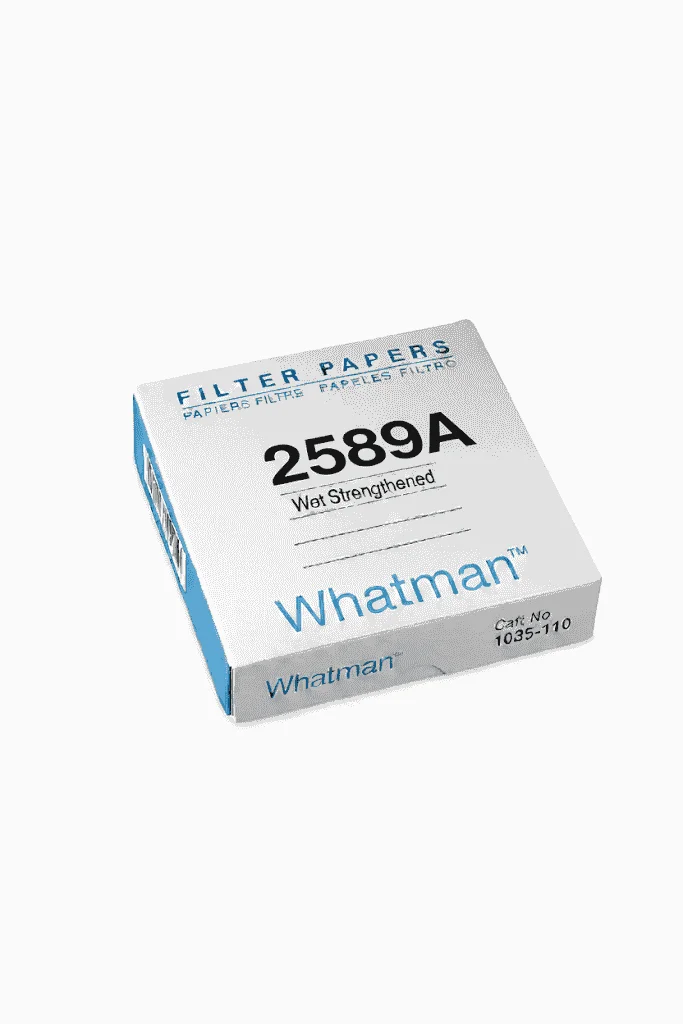
Product Name – Whatman Grade 2589A Cellulose Filter Paper
Quantity/Pack Size – 140MM (Pack of 500), 580x580MM (Pack of 100)
Form – Circular/Sheet
Grade – 2589A
Application – General lab filtration, qualitative analysis
Product Overview
Whatman Grade 2589A Cellulose Filter Paper is engineered for reliable performance in laboratory filtration applications. This high-quality filter paper is manufactured from pure cellulose fibers, ensuring minimal extractables and consistent filtration results. With a medium flow rate, it efficiently balances speed and particle retention, making it suitable for a wide range of qualitative analysis tasks. The uniform thickness and smooth surface of Grade 2589A provide excellent particle capture while maintaining structural integrity during use. Its natural cellulose composition offers compatibility with most aqueous and organic solvents, though it is not recommended for strong acids or alkalis. The paper’s inherent strength prevents tearing under normal filtration pressures, while its chemical purity ensures no interference with analytical results. Available in both circular and sheet formats, this filter paper adapts to various filtration setups. The medium retention characteristics make it particularly effective for capturing fine particles while allowing clear filtrate collection. Each batch undergoes strict quality control to maintain consistent performance across all applications.
FAQs
1. What is the particle retention capacity of Whatman Grade 2589A?
The medium retention characteristics typically capture particles in the 8-12 micron range while allowing efficient flow rates.
2. Can this filter paper be used with organic solvents?
Yes, it is compatible with most organic solvents, though prolonged exposure to strong solvents may affect its structural integrity.
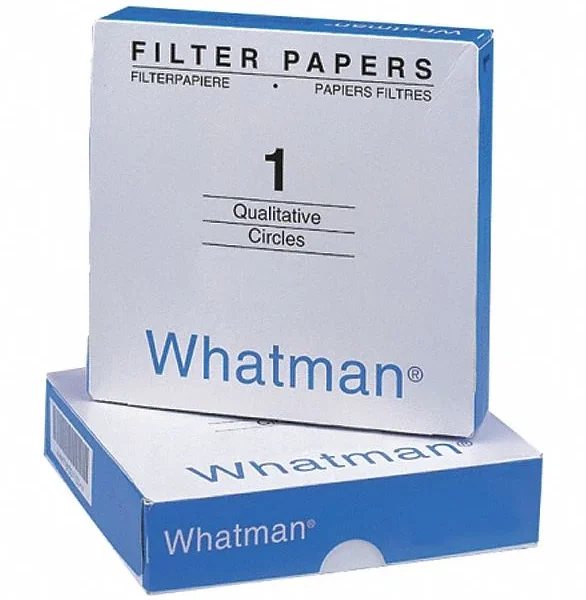
3. How does this compare to Whatman Grade 1 filter paper?
Grade 2589A offers a faster flow rate than Grade 1 while maintaining good particle retention, making it better for applications requiring quicker filtration.
4. What is the recommended storage condition for these filter papers?
Store in a cool, dry environment away from direct sunlight and chemical vapors to maintain performance characteristics.
5. Is this filter paper suitable for quantitative analysis?
While primarily designed for qualitative applications, it can be used for semi-quantitative work where high precision is not required.