Description
Specifications Table
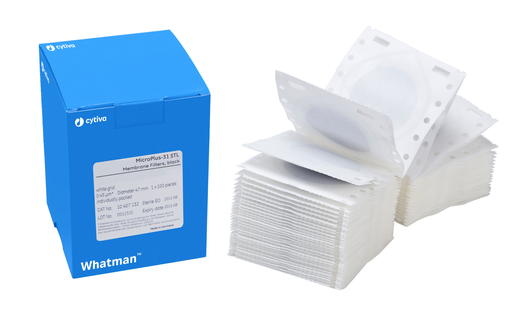
Product Name – Whatman MP21 STL Membrane Filter
Quantity/Pack Size – 47MM, 0.45uM (Pack of 400) | 50MM, 0.45uM (Pack of 400)
Form – Membrane Disc
Grade – Laboratory Grade
Application – Sterile Filtration, Clarification, Particle Removal
Product Overview
The Whatman MP21 STL membrane filter is engineered for precision liquid filtration in laboratory settings, offering a 0.45?m pore size that effectively removes particles, bacteria, and contaminants. Constructed from mixed cellulose esters (MCE), this filter combines mechanical strength with chemical compatibility, making it suitable for aqueous and mild organic solvent applications. Its low extractables profile ensures minimal interference with sensitive analyses, while the hydrophilic nature allows rapid wetting and uniform flow rates. The membrane?s smooth surface minimizes sample retention, reducing potential losses during filtration. Available in 47MM and 50MM diameters, each pack contains 400 discs, providing cost-effective bulk options for high-throughput workflows. The filter?s thermal stability up to 130?C and resistance to common lab reagents enhance its versatility across protocols like sterile filtration, sample prep, and environmental monitoring. Designed for consistency, every batch undergoes rigorous quality control to meet ISO 9001 standards, guaranteeing reliable performance in critical applications. Whether used in syringe filters, vacuum manifolds, or pressure-driven systems, the MP21 STL delivers reproducible results with minimal maintenance, reducing downtime in busy labs.
FAQs
1. What is the maximum operating temperature for Whatman MP21 STL filters?
The filters can withstand continuous use at temperatures up to 130?C, making them suitable for autoclaving and heat sterilization processes without compromising integrity.
2. Are these filters compatible with organic solvents like acetone or methanol?
While primarily designed for aqueous solutions, the MP21 STL filters exhibit moderate compatibility with mild organic solvents such as lower alcohols (e.g., methanol, ethanol) and ketones. For aggressive solvents like acetone or DMSO, PTFE-based membranes are recommended.
3. How does the 0.45?m pore size compare to 0.22?m for sterile filtration?
A 0.45?m pore size effectively removes most bacteria and large particles but may allow smaller mycoplasmas or viruses to pass. For absolute sterility (e.g., cell culture media), 0.22?m filters are preferred, though 0.45?m remains standard for general clarification and pre-filtration.
4. Can these filters be reused after autoclaving?
Though structurally stable post-autoclaving, reuse is not advised due to potential cross-contamination and reduced filtration efficiency. The filters are intended for single-use applications to maintain sterility and performance consistency.
5. What alternatives exist for filtering viscous or protein-rich samples?
For viscous liquids or protein solutions prone to membrane clogging, consider glass fiber pre-filters or PES (polyethersulfone) membranes with lower protein binding. The MP21 STL?s MCE composition may adsorb proteins, affecting yield in sensitive assays.